Published: 25th May 2026
The findings of the first Understanding Scotland Economy Tracker since the Scottish Parliament Election bring into focus the scale of the challenge facing the new MSPs.
Despite growing confidence in the country’s direction, economic sentiment has plummeted, with the cost of living now the number one issue for the majority of Scots.
Cost of Living Once Again the Defining Issue
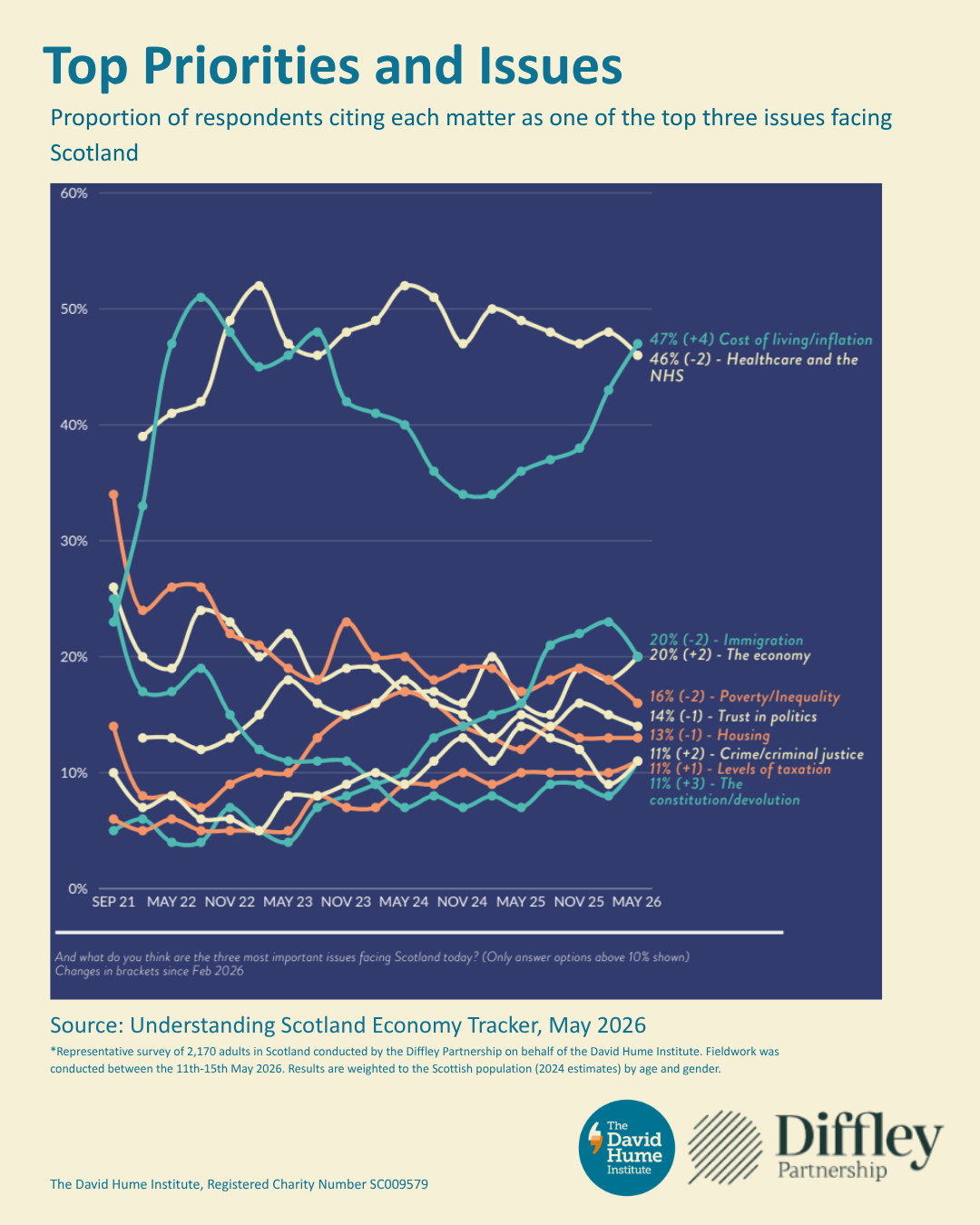
For the first time in nearly three years, the cost of living has overtaken the NHS as the single biggest concern facing Scots. Almost one in two (47%) now rank it among the top issues facing the country, according to the latest quarterly survey, conducted by Diffley Partnership on behalf of the David Hume Institute.
Public concern about the cost of everyday life has increased considerably in the year to date, with the 9% increase since November 2025 (37% to 48%) the sharpest increase of public concern for any issue since late 2021. By contrast, campaigning during the election period seems not to have had much impact in shaping Scot’s priorities.
Limited Economic Confidence Collapses
Scots are extremely pessimistic about the future of the economy. Minimal waves of optimism indicated in February’s quarterly survey have been washed aside.
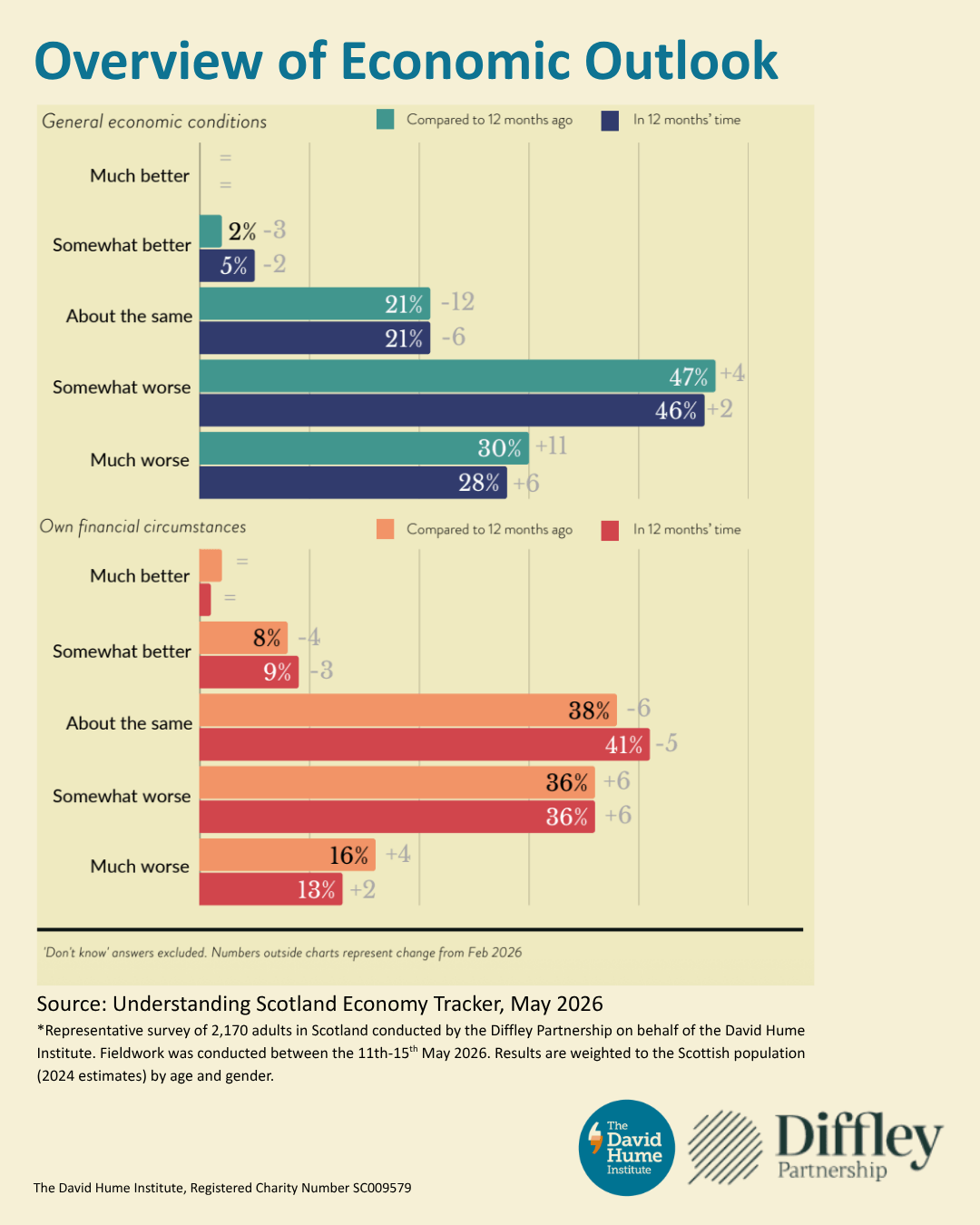
More than three in four Scots (77%) now say the economy is worse than a year ago, up sharply from around three in five (62%) in February. Notably, three in ten Scots (30%) report feeling that the economy is ‘Much Worse’ than it was a year ago, a considerable 11% increase since February.
But while most (73%) expect economic conditions to deteriorate in the next twelve months, a majority (51%) also expect their own financial circumstances to remain the same or improve in year ahead.
Growing Pressures on Consumer Spending
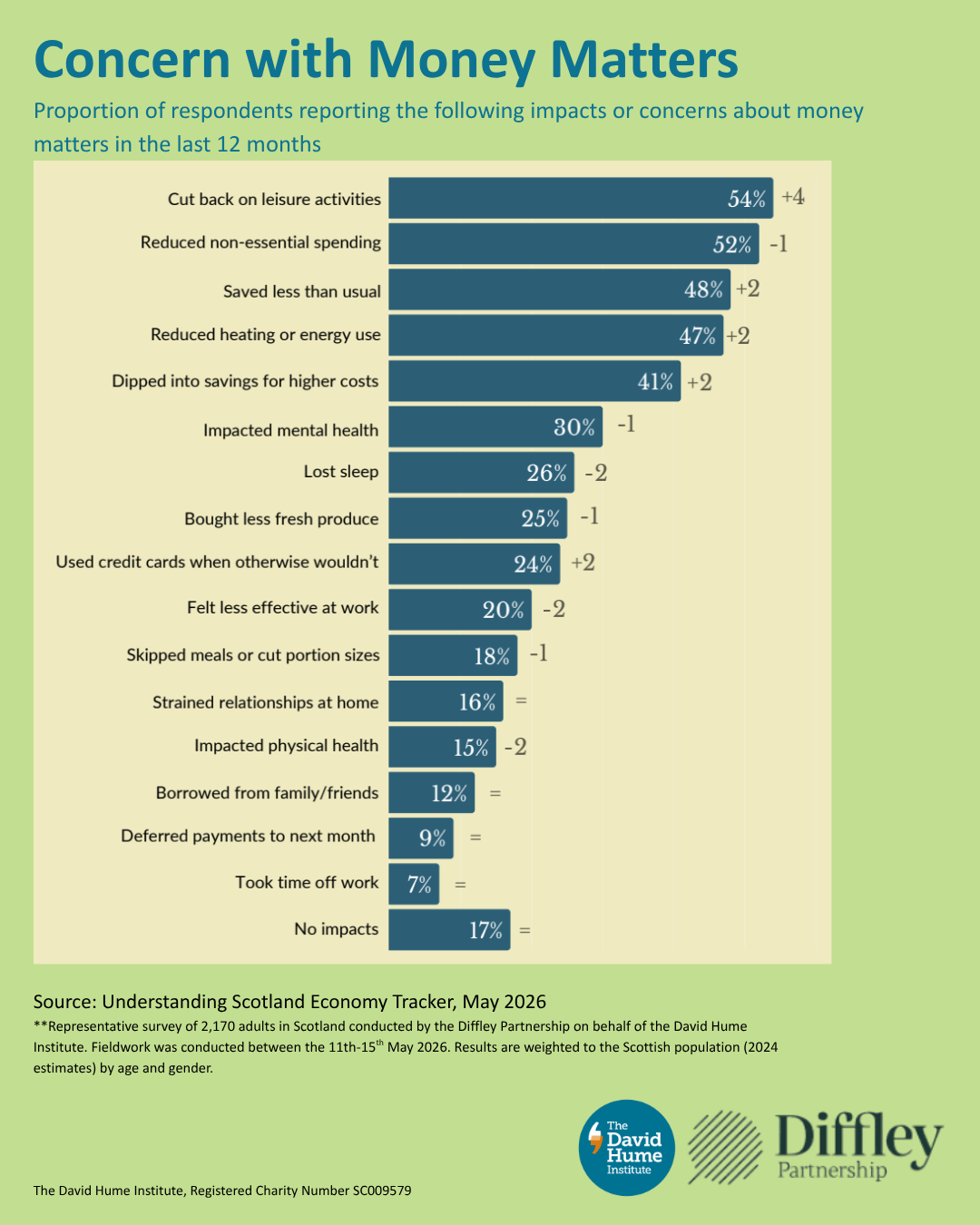
Cost of living concerns are not just shaping perspectives on the wider economy, they are affecting behaviour within it. More than half of respondents (54%) have cut back on leisure activities because of concerns about money. This is a 4% increase since the last quarterly tracker in February.
A similar proportion (52%) have reduced non-essential spending. Over two in five Scots (41%) report using savings to cover higher costs.
Scots Support Preventative Action
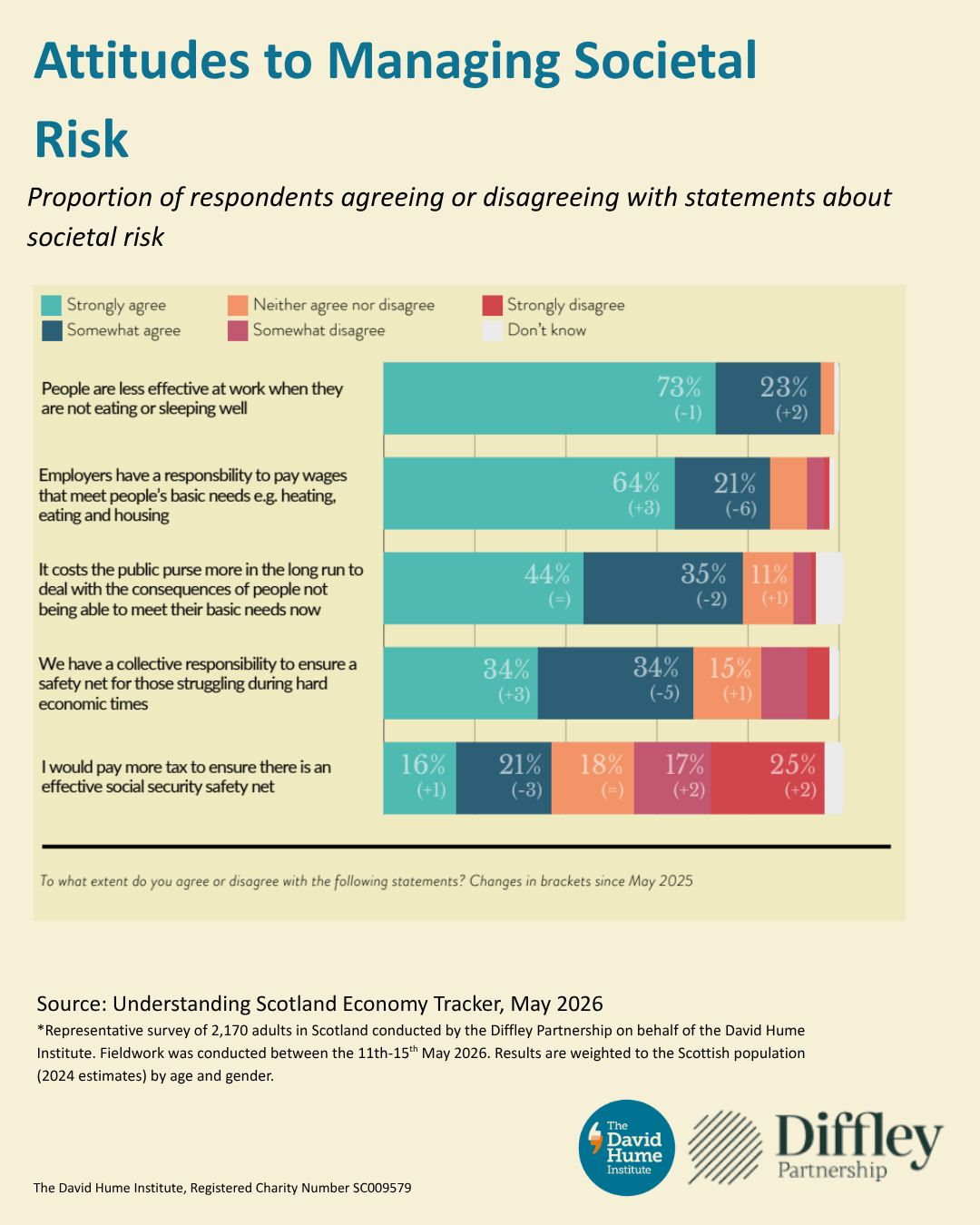
As decision makers seek to rebuild economic confidence, new data from the tracker indicates that the overwhelming majority of Scots continue to support preventative action to tackle economic hardship.
Nearly four in five (78%) Scots agree it costs the public purse more in the long run when people cannot meet their basic needs today. Over two thirds (68%) also agree there is a collective responsibility to ensure a safety net during hard economic times.