Applications of Mathematics - a revolution in maths education in Scotland?
Our latest briefing examines Scotland’s Applications of Mathematics qualifications. The subject continues to experience extraordinary growth since its introduction, with entries in National 5 increasing sevenfold in seven years, and helping drive a significant rise in the number of young people studying mathematics.
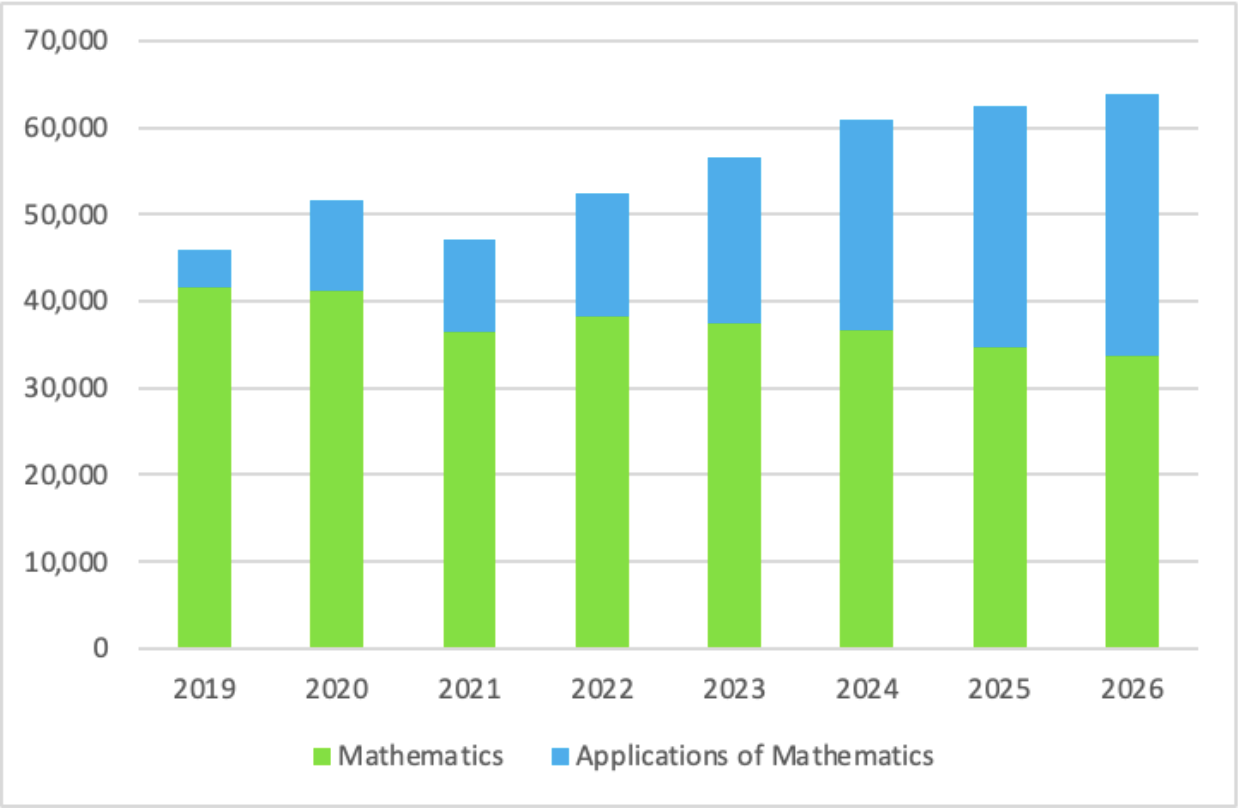
Graph to show entries into mathematics and applications of mathematics at National 5 from 2019 to 2026
The briefing, Applications of Mathematics: A Revolution in Maths Education in Scotland?, shows that National 5 Applications of Mathematics entries rose from just 4,460 in 2019 to 30,045 in 2026.
The qualification is now the third most popular National 5 examination in Scotland, behind only English and traditional Mathematics. Together, Applications of Mathematics and traditional Mathematics have resulted in an increase of almost 40% in the total number of entries into a National 5 maths qualification.
The paper argues that the qualification represents an important innovation in Scottish education by focusing on practical mathematical skills that young people use in everyday life - including budgeting, taxation, personal finance, loans, interest rates and interpreting data - while also supporting the skills increasingly sought by employers in sectors such as financial services and data science.
Overall participation in mathematics has increased by more than a third and rather than replacing traditional mathematics, the evidence suggests the qualification is broadening participation. Some pupils are choosing to study both qualifications.
As conversations continue around financial literacy, workforce skills and curriculum reform, the paper concludes that Applications of Mathematics offers an important piece of the jigsaw for how education can better connect classroom learning with real-world challenges and future employment.