Published: 25th February 2026
The final Understanding the Scotland Economy tracker before the May Scottish Parliament elections shows how Scots are experiencing the economy and what they want to see prioritised in party manifestos.
While pessimistic economic sentiment has softened slightly since November, financial strain remains and the cost of living looks likely to remain salient to the campaign ahead.
Pre-Election Priorities
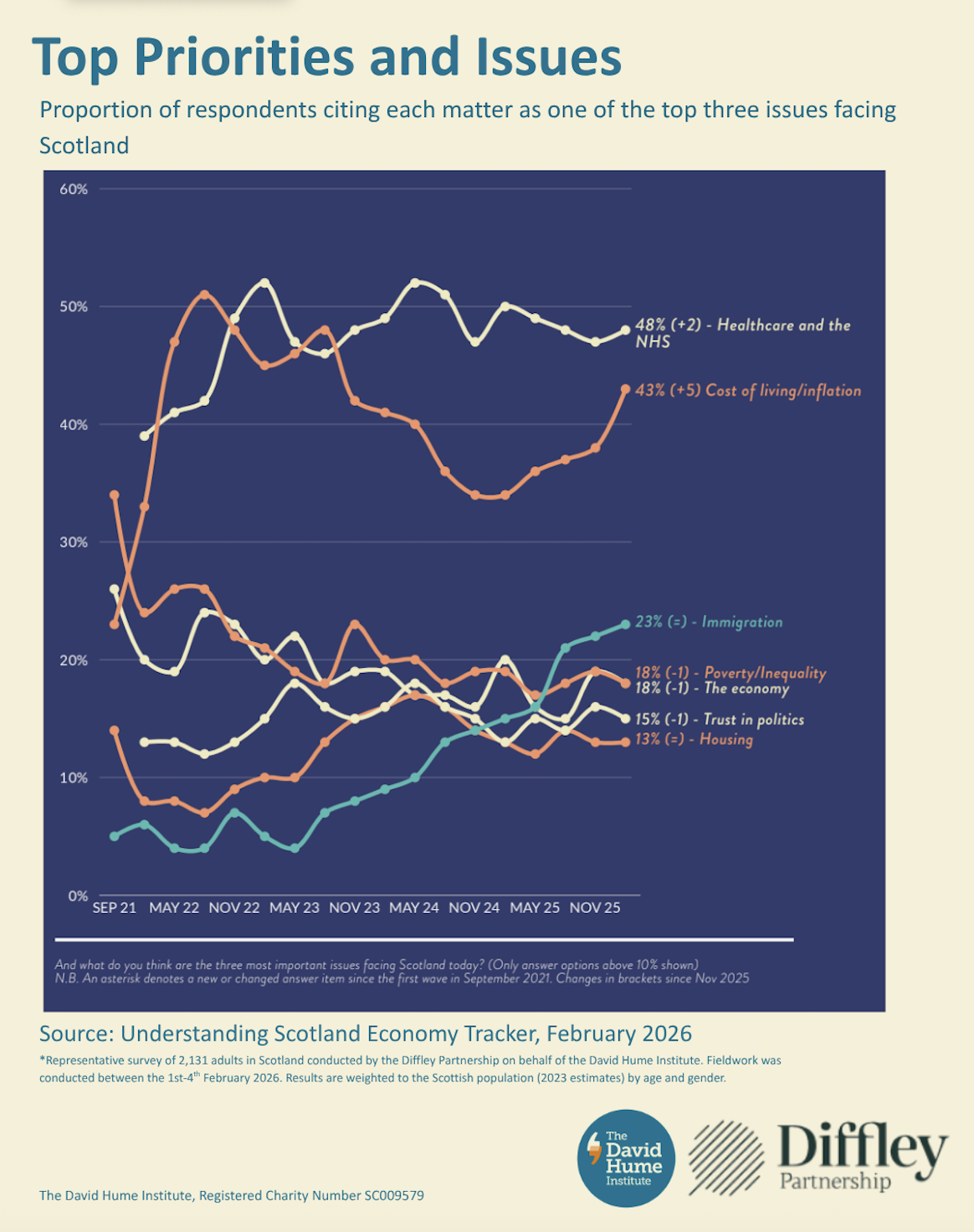
The last tracker before the Scottish Parliament elections reveals that the cost of living and the NHS remain the most important issues to voters. Half (48%) of respondents to the survey, commissioned by the David Hume Institute and produced by the Diffley Partnership, cite healthcare and the NHS as a top priority. Near half (43%) said that the cost of living and inflation should be a national priority, a five percent increase since the most recent quarterly tracker.
Economic Pressures Easing Slightly
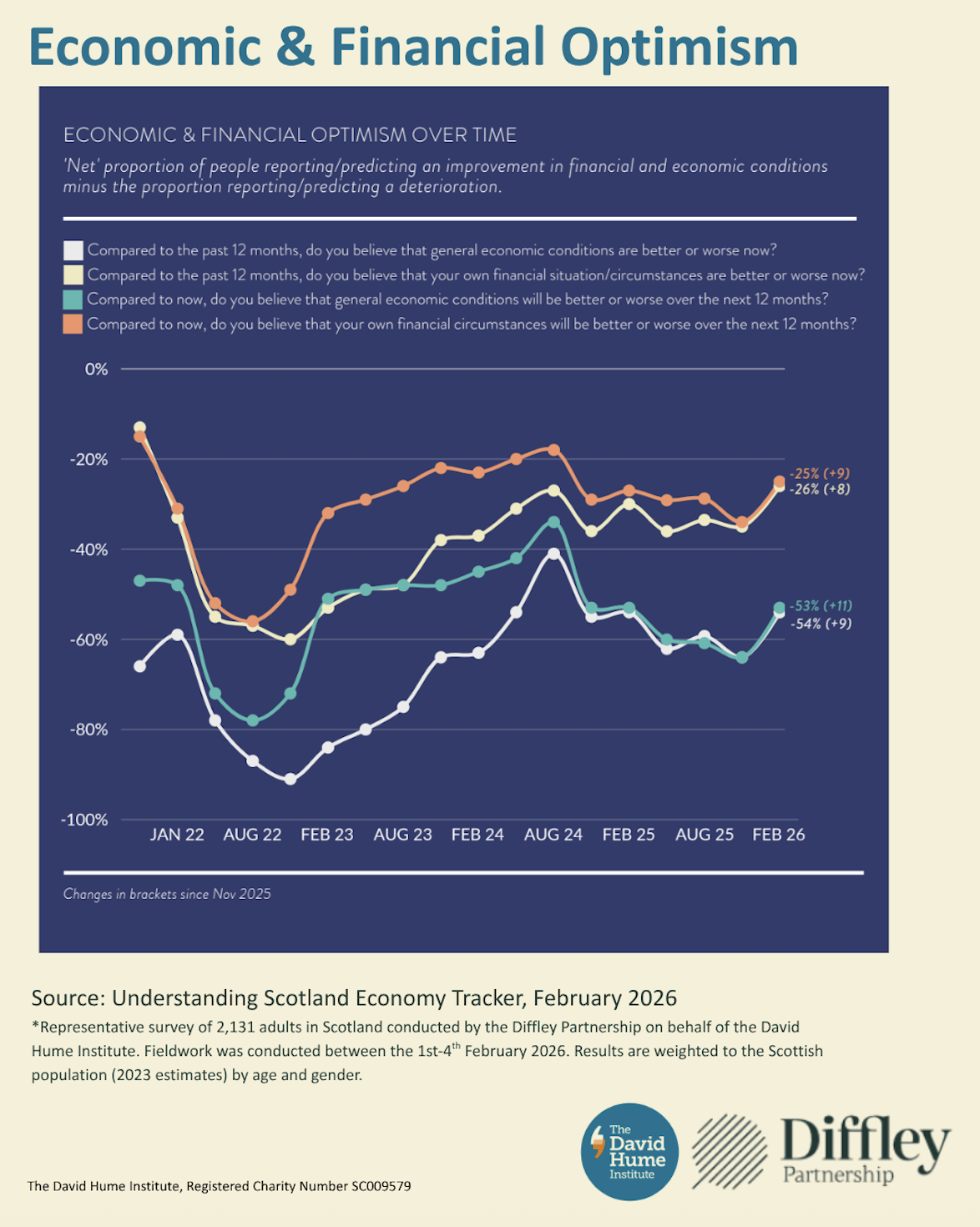
Pessimism still dominates the overall economic outlook, with less than one in ten (7%) thinking economic conditions will be better in a year than today. However, sentiment is markedly less pessimistic than it has been across the past two years.
For instance, while three in five (62%) think that general economic conditions are worse now than they were a year ago, this is a seven percent drop since November. Looking ahead, two in three (66%) expect conditions to worsen in the next twelve months, down from three in four (73%) previously.
Financial Strain Remains
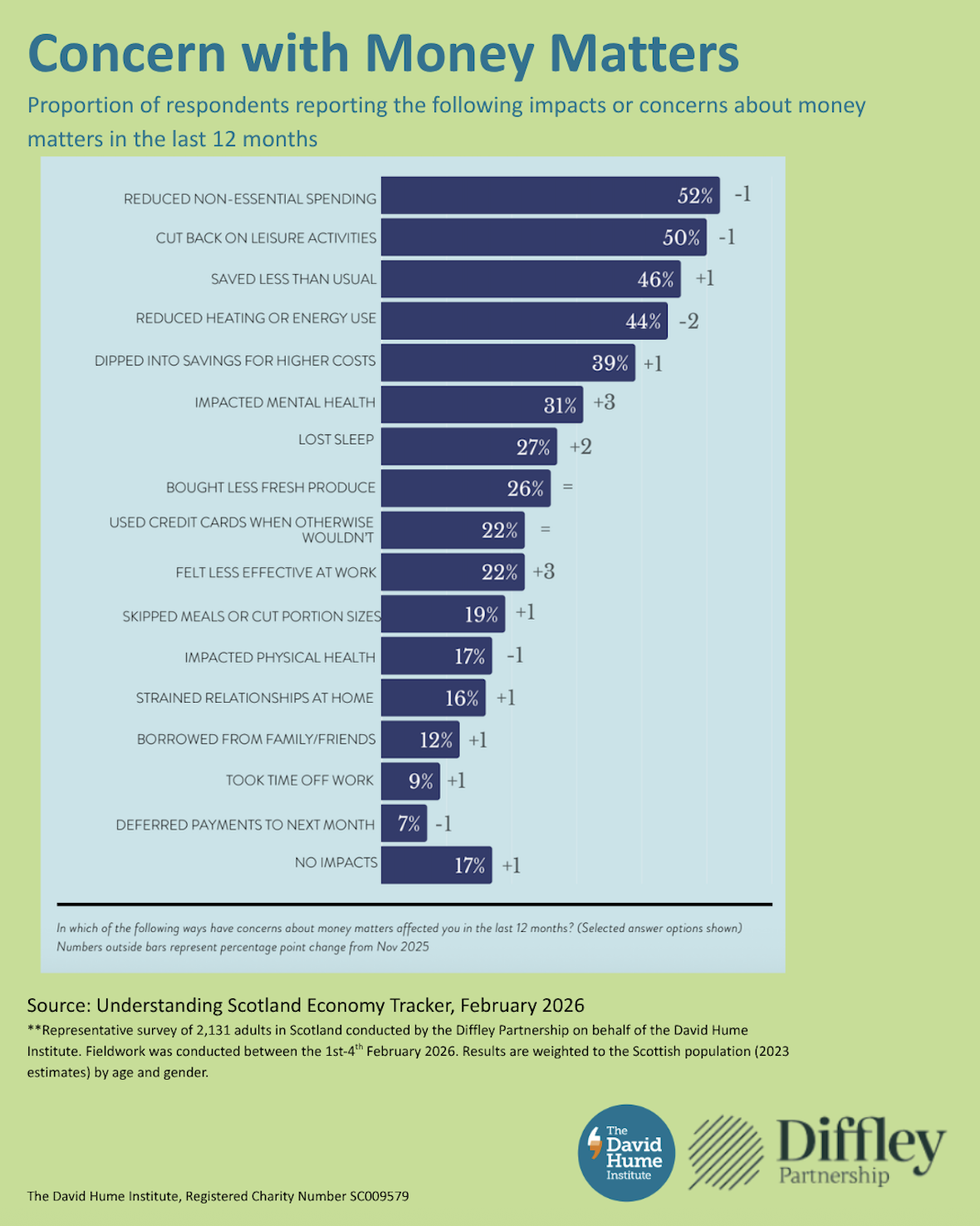
While overall economic sentiment has improved at the start of the year, financial strain is still widespread and penetrating the actions and spending of everyday life for many. The majority (52%) report recently cutting non-essential spending, while nearly one in three (31%) say that money worries are impacting their mental health, a three percent rise and among the highest rates since the tracker began.
Looking ahead, concerns about essential costs increasing remain. In the year ahead, over two thirds (69%) expect higher utility bills, one in two (50%) expect to spend more on food and drink and around the same (49%) anticipate spending more on their housing.
Scots sceptical about how the economy works
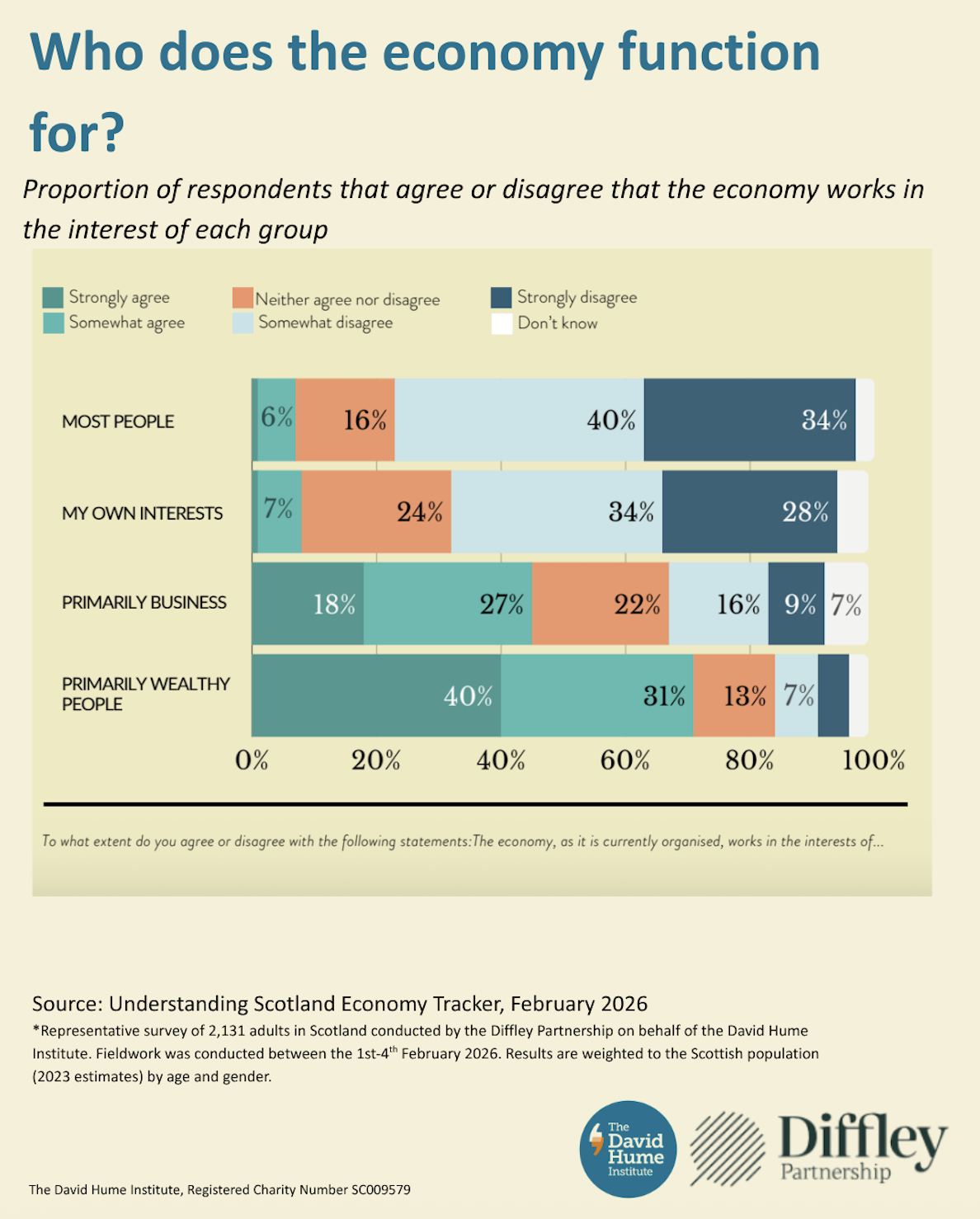
New data from the tracker indicates that whoever forms the next Government may need to focus on rebuilding faith that Scotland’s economy can work in the interests of the majority of the people that live here. Seven in ten (71%) believes the economy works primarily in the interests of the wealthy, while just one in fourteen (7%) believes the economy works for most people. Just one in twelve (8%) thinks the economic system works for them.