Published 23rd November 2025

The latest Understanding Scotland Economy Tracker reveals low optimism about the economy and highlights how these concerns are shaping everyday life.
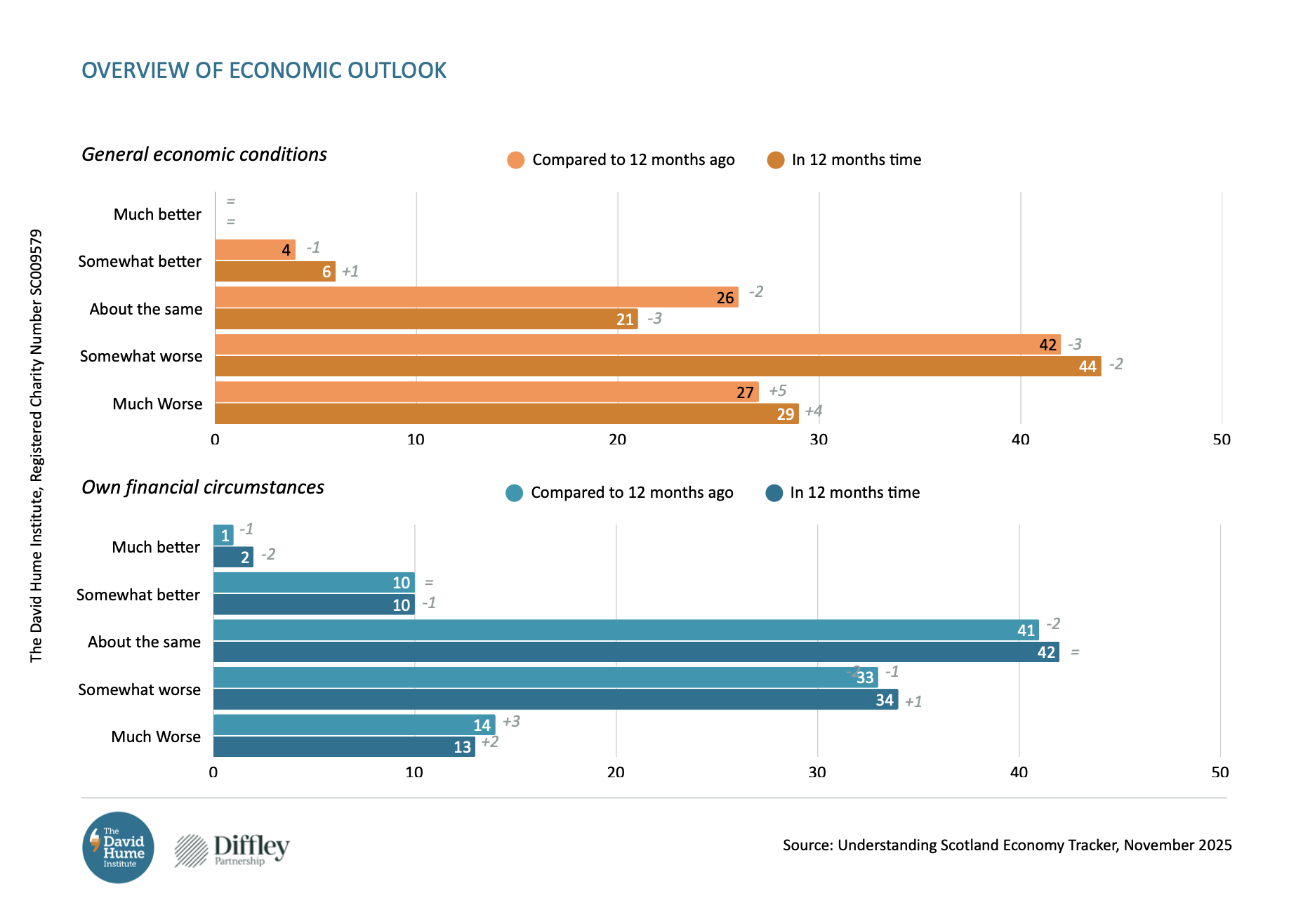
With the Scottish Parliament election half a year away, seven out of ten Scots (69%) say that economic conditions are worse today than a year ago.
This quarterly survey, commissioned by the David Hume Institute and produced by the Diffley Partnership, is the final wave of 2025. A summary of key findings in the report is presented below.
Pessimistic Economic Outlook
As the UK budget looms, pessimism about the economy has increased since the last survey, with nearly three quarters (73%) of respondents expecting conditions to worsen in the year ahead. Overall gloomy sentiment has hardened, with the proportion of respondents reporting a deterioration of general economic conditions at its highest rate since November 2023.
Households Bracing for Pressures Ahead
New data revealed in the latest tracker demonstrates the impacts that concerns over Scotland’s economy bring households across the country.
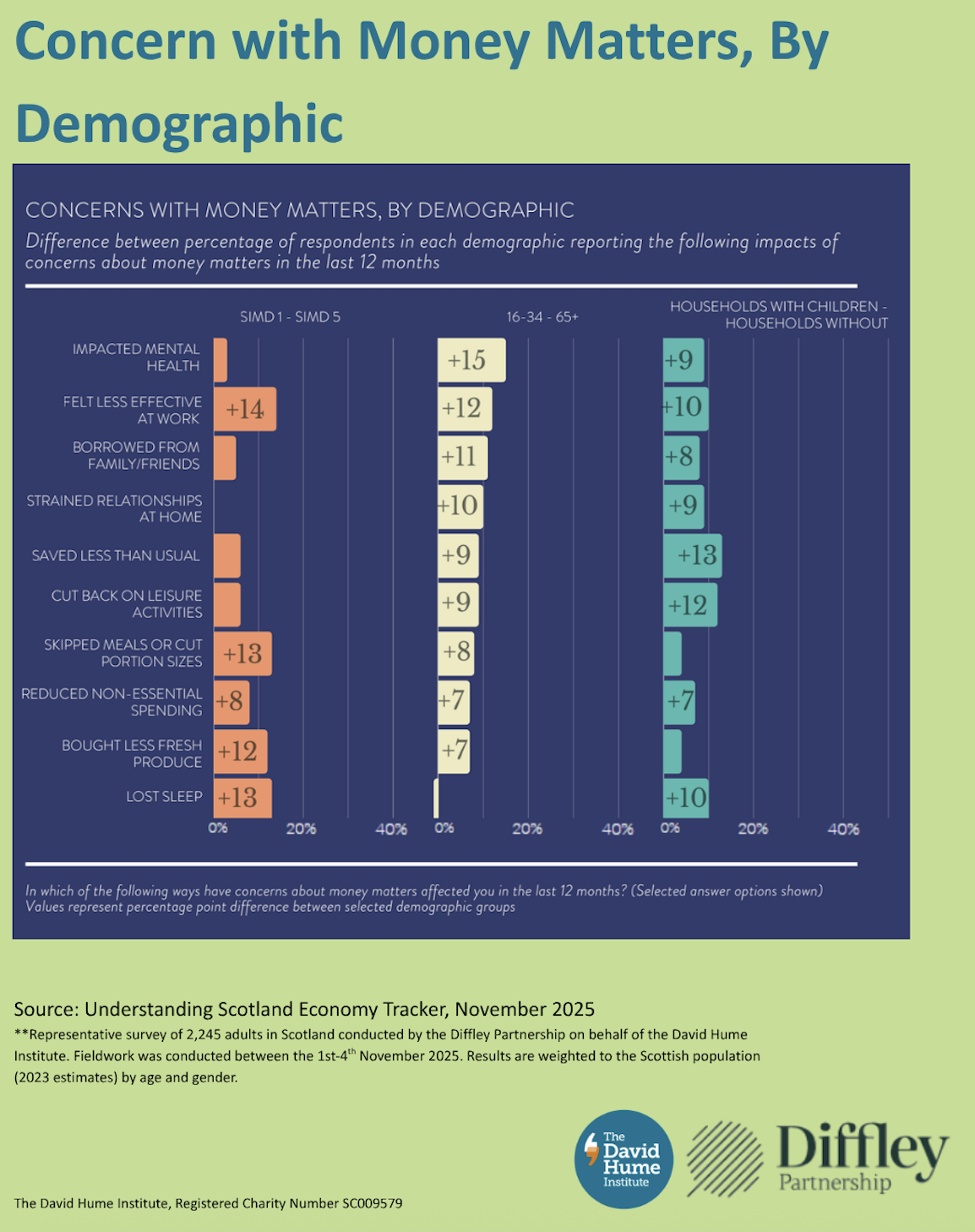
Four out of five (84%) report some form of negative impact to their everyday life from concerns about money in the past year. With the winter months underway, one in five Scots (18%) report impacts to their physical health from money matters and nearly half (47%) say financial concerns have reduced their heating use in the past year.
The tracker also indicates that younger people and those with children are more likely to report significant impacts to everyday life from money concerns. Households with children are nearly 10% more likely to report negative changes in behaviour and spending habits than those without. There is a similar difference between younger people (16-34) and older people (65+).
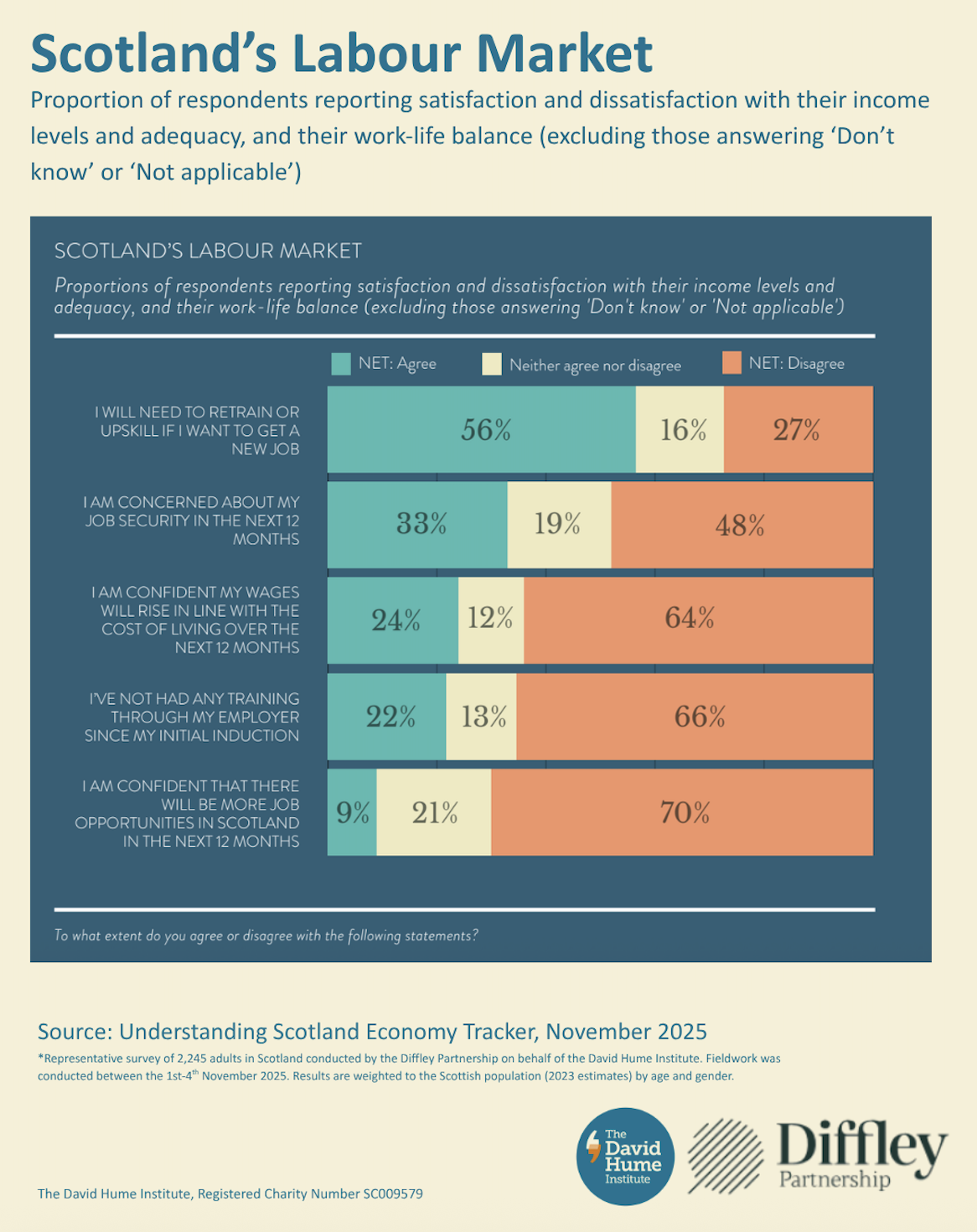
Low Labour Market Expectations
Heading into a new year, expectations for the labour market in the next twelve months remain low. Fewer than one in ten (9%) agree there will be more job opportunities in the year ahead, with seven in ten (70%) disagreeing.
Data from the tracker also demonstrates underlying concerns about preparedness for any new roles. While a majority of respondents (56%) think they would need to retrain or up-skill to get a new job, nearly a quarter (22%) report receiving no training in their current job since their initial induction.