

A New National Progression?
New briefing paper on the rapid growth of practical qualifications shows Scottish learners embracing the chance to develop real world skills
Attainment in National Progression Awards has more than doubled since 2022, prompting calls for more awareness about new qualifications.
Wednesday 23rd September 2026
A new briefing from The David Hume Institute shows a significant shift in how learners in Scotland build practical work-ready skills alongside traditional exams.
The paper, “The Changing Landscape of Education in Scotland: A New National Progression?” reveals that attainment of National Progression Awards (NPAs) - qualifications typically assessed continuously throughout the year rather than in a final high stakes exam, has more than doubled from 19,640 in 2022 to 44,0303 in 2026.
NPAs now span more than 267 subject areas including cyber security, data science, sports leadership and health care. They are increasingly being delivered in-house by secondary schools across Scotland to broaden choices and learning in the senior phase.
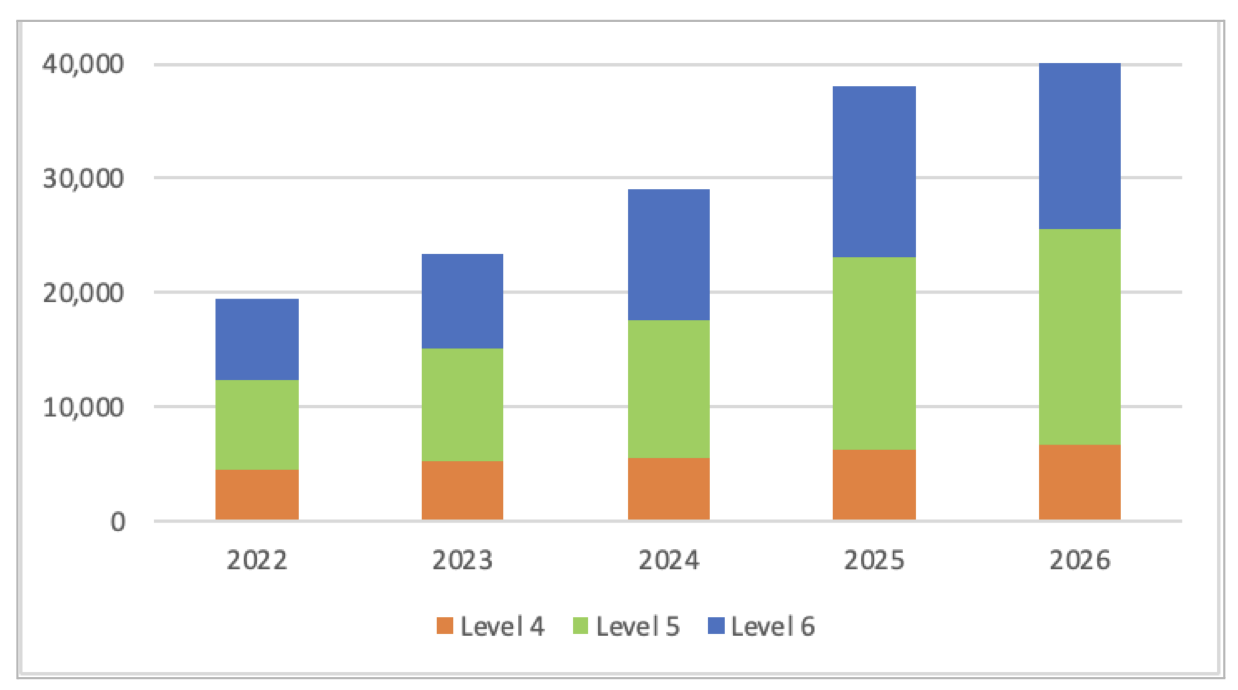
Source: The David Hume Institute from Qualifications Scotland Attainment Statistics 2026
This growth reflects the recommendations of the Hayward Review which was commissioned by the Scottish Government and published in 2023. The trend mirrors that in other countries highlighted in the OECD’s 2026 report, A Skills First Labour Market which calls on education systems across the globe to focus on practical, transferable skills that directly support employability and economic opportunity.
The new briefing identifies curriculum flexibility, the growing relevance of practical and job-ready skills, and increased delivery of NPAs directly within secondary schools as factors behind their growth.
The briefing also highlights challenges accompanying the expansion of NPAs. Access to particular subjects varies across Scotland, while employers and recruiters will need to understand an increasingly diverse qualifications landscape. Schools and colleges are using approaches such as cluster-school provision, college partnerships and online tutoring to broaden access.
The growth of National Progression Awards is highly relevant to the upcoming Milburn Review publication because it shows that changes to how young people develop skills, are assessed and connected to future jobs are already underway in Scotland.

Applications of Mathematics - a revolution in maths education in Scotland?
New briefing reveals a transformation in maths education in Scotland. Data shows the new maths qualification is attracting thousands more young people to study mathematics.
Our latest briefing examines Scotland’s Applications of Mathematics qualifications. The subject continues to experience extraordinary growth since its introduction, with entries in National 5 increasing sevenfold in seven years, and helping drive a significant rise in the number of young people studying mathematics.
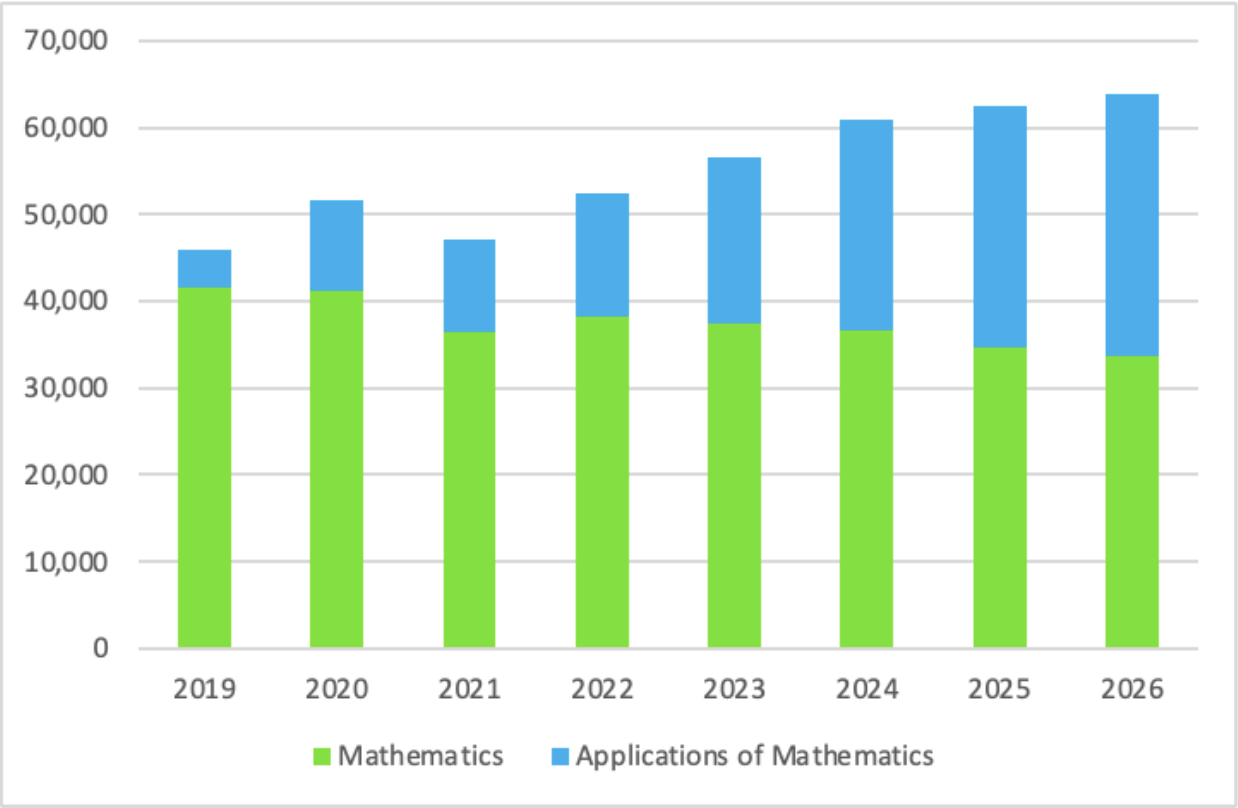
Graph to show entries into mathematics and applications of mathematics at National 5 from 2019 to 2026
The briefing, Applications of Mathematics: A Revolution in Maths Education in Scotland?, shows that National 5 Applications of Mathematics entries rose from just 4,460 in 2019 to 30,045 in 2026.
The qualification is now the third most popular National 5 examination in Scotland, behind only English and traditional Mathematics. Together, Applications of Mathematics and traditional Mathematics have resulted in an increase of almost 40% in the total number of entries into a National 5 maths qualification.
The paper argues that the qualification represents an important innovation in Scottish education by focusing on practical mathematical skills that young people use in everyday life - including budgeting, taxation, personal finance, loans, interest rates and interpreting data - while also supporting the skills increasingly sought by employers in sectors such as financial services and data science.
Overall participation in mathematics has increased by more than a third and rather than replacing traditional mathematics, the evidence suggests the qualification is broadening participation. Some pupils are choosing to study both qualifications.
As conversations continue around financial literacy, workforce skills and curriculum reform, the paper concludes that Applications of Mathematics offers an important piece of the jigsaw for how education can better connect classroom learning with real-world challenges and future employment.
Does Scotland need a digital wallet for skills?
Is a digital wallet for skills critical missing infrastructure for both employers and individuals? This discussion paper explores if a digital wallet for skills in Scotland can save both time and money, and ultimately help the economy to thrive.
From imagination to action discussion paper

A workforce, with individuals keeping their knowledge and skills up to date throughout their lives, is critical for the economy to thrive.
Are employers losing time and money repeating training? How easy is it for job-seekers or employees to evidence all their skills and training?
This discussion paper explores if a digital wallet for skills could be critical missing infrastructure for both employers and individuals. What can we learn from elsewhere in the world? Could a digital wallet for skills in Scotland save both time and money, and ultimately help the economy to thrive?
Report: Who will do the jobs in Scotland?
This report discusses the challenges facing Scotland with changes to migration patterns and a shortage of workers. What can we do to meet the labour supply challenges in Scotland. Who will do the jobs?

Current employment rates in Scotland are at a near-record high. However, Scotland’s population is ageing fast and there is a low birth rate.
By 2041, the pension-age population is projected to increase by 265,000, while the working-age population is only projected to rise by 38,000.
This report discusses the challenges facing Scotland with changes to migration patterns and a shortage of workers. What can we do to meet the labour supply challenges in Scotland. Who will do the jobs?
Elitist Scotland?
The Social Mobility and Child Poverty Commission in partnership with the David Hume Institute examine the background of almost 850 leaders in politics, business, the media and other areas of public life in Scotland; this report looks at the social background of the people who run Scotland.
Rt. Hon. Alan Milburn Chair, Social Mobility and Child Poverty Commission
This report looks at the social background of the people who run Scotland, following up an earlier study carried out by the Social Mobility and Child Poverty Commission looking at this issue for Great Britain as a whole. In partnership with the David Hume Institute and with the support of postgraduate researchers at the University of Edinburgh, we have examined the background of almost 850 leaders in politics, business, the media and other areas of public life in Scotland.