

A New National Progression?
New briefing paper on the rapid growth of practical qualifications shows Scottish learners embracing the chance to develop real world skills
Attainment in National Progression Awards has more than doubled since 2022, prompting calls for more awareness about new qualifications.
Wednesday 23rd September 2026
A new briefing from The David Hume Institute shows a significant shift in how learners in Scotland build practical work-ready skills alongside traditional exams.
The paper, “The Changing Landscape of Education in Scotland: A New National Progression?” reveals that attainment of National Progression Awards (NPAs) - qualifications typically assessed continuously throughout the year rather than in a final high stakes exam, has more than doubled from 19,640 in 2022 to 44,0303 in 2026.
NPAs now span more than 267 subject areas including cyber security, data science, sports leadership and health care. They are increasingly being delivered in-house by secondary schools across Scotland to broaden choices and learning in the senior phase.
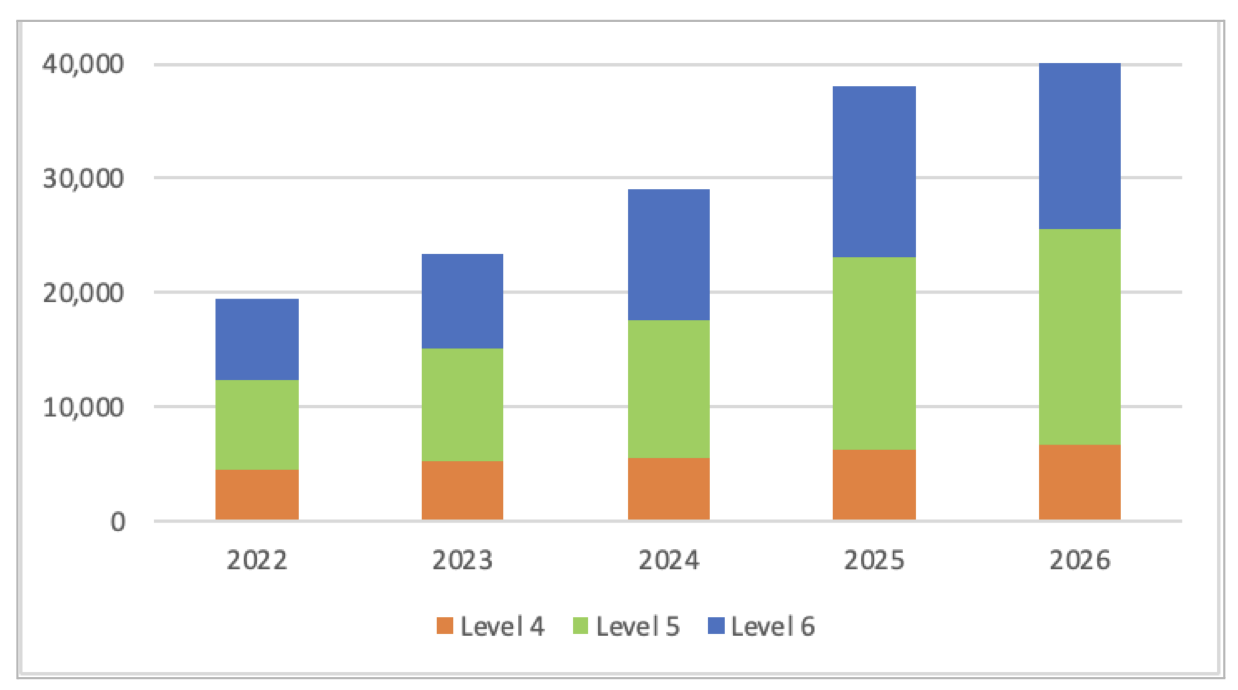
Source: The David Hume Institute from Qualifications Scotland Attainment Statistics 2026
This growth reflects the recommendations of the Hayward Review which was commissioned by the Scottish Government and published in 2023. The trend mirrors that in other countries highlighted in the OECD’s 2026 report, A Skills First Labour Market which calls on education systems across the globe to focus on practical, transferable skills that directly support employability and economic opportunity.
The new briefing identifies curriculum flexibility, the growing relevance of practical and job-ready skills, and increased delivery of NPAs directly within secondary schools as factors behind their growth.
The briefing also highlights challenges accompanying the expansion of NPAs. Access to particular subjects varies across Scotland, while employers and recruiters will need to understand an increasingly diverse qualifications landscape. Schools and colleges are using approaches such as cluster-school provision, college partnerships and online tutoring to broaden access.
The growth of National Progression Awards is highly relevant to the upcoming Milburn Review publication because it shows that changes to how young people develop skills, are assessed and connected to future jobs are already underway in Scotland.

Applications of Mathematics - a revolution in maths education in Scotland?
New briefing reveals a transformation in maths education in Scotland. Data shows the new maths qualification is attracting thousands more young people to study mathematics.
Our latest briefing examines Scotland’s Applications of Mathematics qualifications. The subject continues to experience extraordinary growth since its introduction, with entries in National 5 increasing sevenfold in seven years, and helping drive a significant rise in the number of young people studying mathematics.
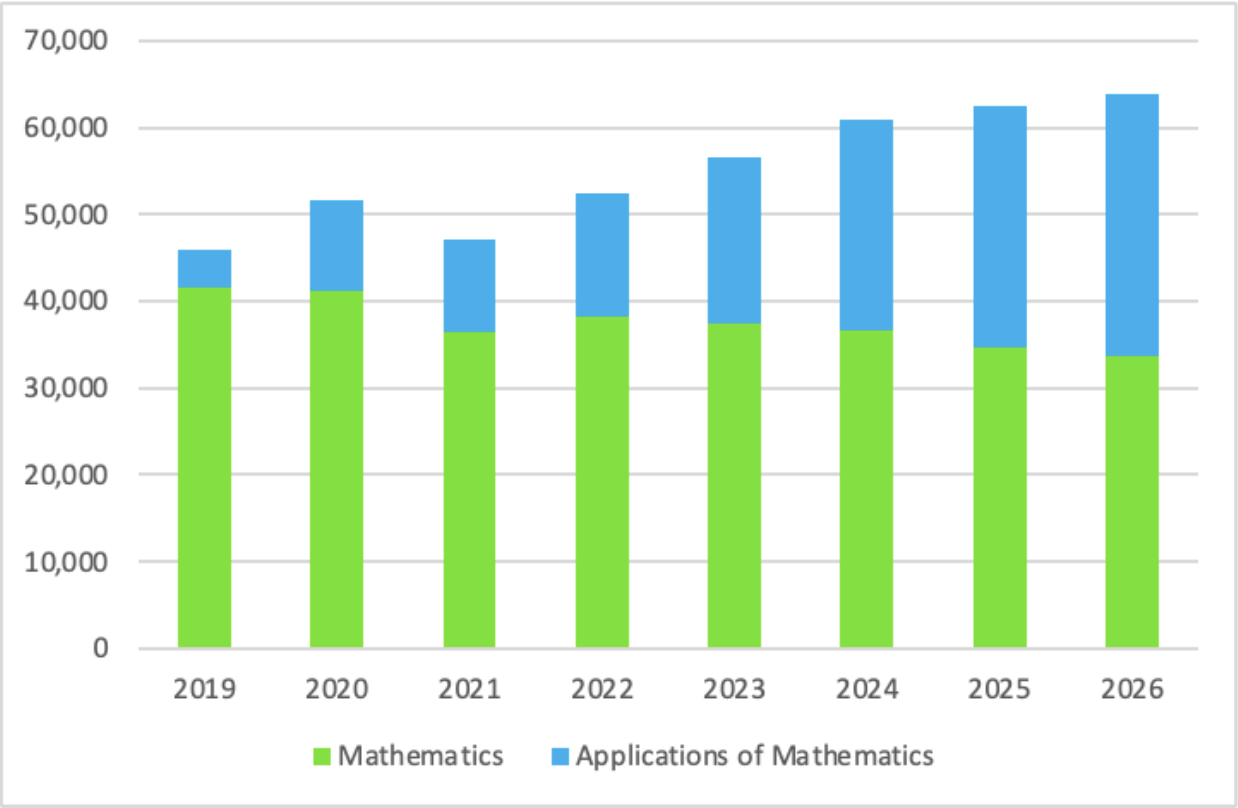
Graph to show entries into mathematics and applications of mathematics at National 5 from 2019 to 2026
The briefing, Applications of Mathematics: A Revolution in Maths Education in Scotland?, shows that National 5 Applications of Mathematics entries rose from just 4,460 in 2019 to 30,045 in 2026.
The qualification is now the third most popular National 5 examination in Scotland, behind only English and traditional Mathematics. Together, Applications of Mathematics and traditional Mathematics have resulted in an increase of almost 40% in the total number of entries into a National 5 maths qualification.
The paper argues that the qualification represents an important innovation in Scottish education by focusing on practical mathematical skills that young people use in everyday life - including budgeting, taxation, personal finance, loans, interest rates and interpreting data - while also supporting the skills increasingly sought by employers in sectors such as financial services and data science.
Overall participation in mathematics has increased by more than a third and rather than replacing traditional mathematics, the evidence suggests the qualification is broadening participation. Some pupils are choosing to study both qualifications.
As conversations continue around financial literacy, workforce skills and curriculum reform, the paper concludes that Applications of Mathematics offers an important piece of the jigsaw for how education can better connect classroom learning with real-world challenges and future employment.
Does Scotland need a digital wallet for skills?
Is a digital wallet for skills critical missing infrastructure for both employers and individuals? This discussion paper explores if a digital wallet for skills in Scotland can save both time and money, and ultimately help the economy to thrive.
From imagination to action discussion paper

A workforce, with individuals keeping their knowledge and skills up to date throughout their lives, is critical for the economy to thrive.
Are employers losing time and money repeating training? How easy is it for job-seekers or employees to evidence all their skills and training?
This discussion paper explores if a digital wallet for skills could be critical missing infrastructure for both employers and individuals. What can we learn from elsewhere in the world? Could a digital wallet for skills in Scotland save both time and money, and ultimately help the economy to thrive?
Research: Scotland’s top charity leaders: how diverse are they?
The David Hume Institute measures the diversity of Scotland’s top leaders. For the first time in our analysis this includes the leaders of the top 300 charities by income. Read the research here.

Scotland needs all its current top leaders to actively champion diversity and provide the opportunities to ensure faster progress. More equal societies have higher productivity, and high productivity allows more investment to create more equal societies.
The David Hume Institute measures the diversity of Scotland’s top leaders. For the first time in our analysis this includes the leaders of the top 300 charities by income. As major influencers and lobbyists who impact on all parts of our society, charity leaders have a key role in making sure that their leadership is representative of the communities they serve.
The top 300 charities by income represent just 1% of the total charities in Scotland and control over £10 billion each year - 73% of the sector's total annual income - but their leaders are not representative of the communities they serve.

66% Male

34% Female

2% Ethnic minorities
The research, which analyses the backgrounds of the chairs and chief executives of the 300 highest income charities in Scotland, finds that:
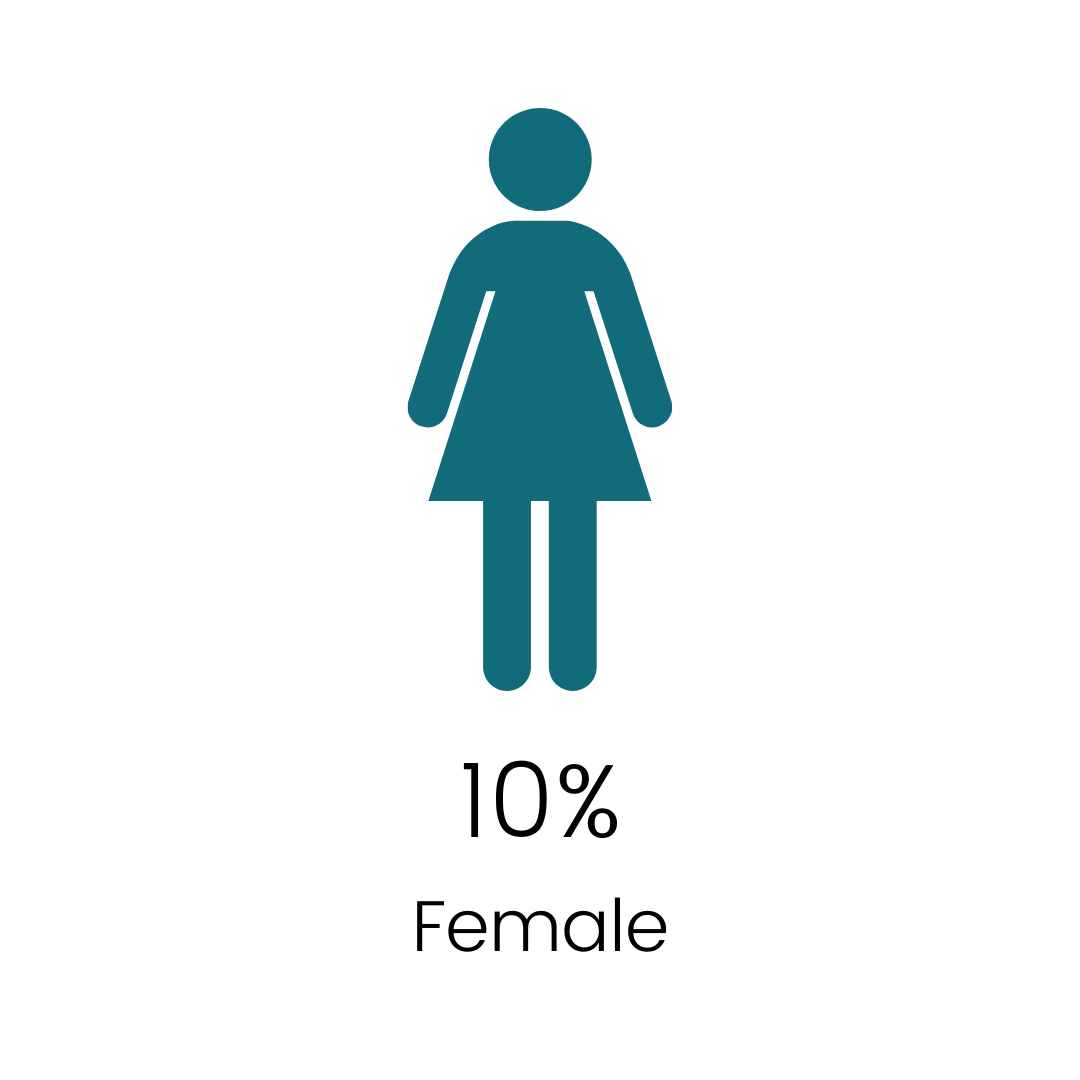
Only 1 in 3 leaders (34%) are women and only 1 in 50 (2%) are black or Asian, compared to 10% female and 1% ethnic minorities in business and investment leaders.
1 in 25 (4%) hold a top leadership position in another one of the top 300 charities.
The research showed the picture is not uniform across the top 300 charities which include universities, colleges, housing associations, fee-paying schools, health and social care charities.
Charitable status comes with high levels of public trust and tax breaks, as well as the legal responsibility to deliver public benefit. But not all organisations are open about who is in control. It is difficult for the public to hold people to account if they don’t know who they are.
The research recommends an extension of the Scottish Charity Regulator’s (OSCR) powers to create a publicly searchable register of charity trustees to bring them in line with company directors. This change will increase transparency and enable monitoring on diversity.
Increasing diversity of thought is in everyone’s interests as it helps avoid the pitfalls of group think, - where similar people think or make decisions as a group, resulting in unchallenged decision-making, and improves risk management and productivity. More equal societies have higher productivity, and high productivity allows more investment to create more equal societies.
Research: What do business and investment leaders bring to Team Scotland?
New research into the education and diversity background of over 200 business leaders shows that faster progress is needed if Scotland’s economy is going to benefit
Click here to read the briefing paper.
Faster growth in diversity at the top level is needed if Scotland is going to benefit from a wider spectrum of thought leadership to maximise the country’s ability to overcome challenges such as increasing productivity, innovation and improving risk management.
Research from the David Hume Institute looking into the education and diversity background of over 220 business and investment leaders shows that there is little diversity - and less than other sectors analysed in the Institute’s previous work.


The analysis found that:
There are still more leaders called John than there are female leaders (7% John and 5% female)
One in four (26%) have held positions at four services companies (Accenture, EY, McKinsey, PwC)
2 out of 3 (65%) of investment company leaders attended an elite university with 1 in 5 of these attending Oxford or Cambridge. This compares to 49% of Angel Investment leaders who attended an elite university.
9% of investment company leaders are female - falling behind the UK average (13%)
20% of angel investor leaders are female - higher gender diversity than others in the business sector
31% of the top business leaders also hold positions on other boards, showing a narrow pool of decision makers has significant influence beyond their own companies.
The David Hume Institute’s research clearly shows limited diversity of Scotland’s top business and investment leaders. Scotland needs its business leaders to not only champion diversity across their organisations, they need to be open to more immediate change at the most senior levels to reap the benefits of more diverse thinking now.
Every business leader must choose to prioritise diversity of thought as we recover from the pandemic if Scotland’s businesses are to increase productivity and resilience to future risks. For Scotland to be in the Champions League for business and investment we need a more diverse squad available for selection.
Research: Does Team Scotland have the right players?
Five years on from the David Hume Institute’s first analysis of Scotland’s top leaders, research shows some sectors have made progress towards being more representative of the population but leaders need to do more to champion diversity in the top positions.
Published 8th October 2020
In 2015 the David Hume Institute published Elitist Scotland? in partnership with the Social Mobility Commission, examining the education diversity of the top decision makers in Scotland.
Five years on we repeated the analysis and increased the scope to investigate gender and ethnicity of the top 708 people in key leadership positions in Scotland. The analysis showed there has been progress in some sectors but others are still lagging behind.


In 2020 analysis of Scotland’s top leaders shows some sectors have made progress towards being more representative of the Scottish population. The Scottish Cabinet and local government Chief Executives are leading the way, however there is much more work to do to improve diversity, especially in the business and legal sector.
With private school students making up just 6% of the Scottish senior school population, Scotland’s top leaders continue to be disproportionately made up from the alumni of fee-paying schools.
In 2015 the percentage of those in leadership positions who were educated at a fee-paying school stood at 23% or nearly one in four. In the last five years this percentage has marginally decreased to 21.3%.
Currently only 1% of those in leadership positions in Scotland are people of colour. 32% of those in this study are women, and only 2 in the 2020 analysis (0.3 %) are women of colour. No subjects were identified with a disability.
If change continues at the current rate it will be at least 2065 before people in leadership positions in Scotland are representative of the population.
Why is this important?
It is now well established that diversity of thought improves an organisation’s performance. The challenges Covid-19 brings mean we need to ensure diversity of thought across all decision making so Scotland is as strong as possible for whatever is the new normal.
Scotland cannot afford for the pace of change in its top team to continue at the current rate. More equal societies have higher productivity. And high productivity allows more investment to create more equal societies.
Scotland needs all of our current top leaders to actively champion diversity and proactively provide the opportunities to ensure faster progress.
What happens now?
The David Hume Institute is committed to equality and diversity of thought - and we know that what gets measured gets done. We will continue to measure this data with the aim of highlighting progress and celebrating those that want to help deliver change at a faster pace.

Briefing paper: The Future Generations Act in Wales and beyond
In 2015 the Welsh Assembly Government passed the Well-being of Future Generations Act and appointed Sophie Howe as the first Future Generations Commissioner for Wales in 2016.
A cross party campaign has now been launched, led by Lord Bird, proposing a UK version of the Bill.
In 2015 the Welsh Assembly Government passed the Well-being of Future Generations Act and appointed Sophie Howe as the first Future Generations Commissioner for Wales in 2016.
The Commissioner is ‘the guardian of the interests of future generations in Wales’. Her remit is outlined in the 2015 Act and embedded in Welsh law. It aims to improve the social, economic, environmental and cultural well-being of the people of Wales and ensure that the decisions of today will benefit the future generations of Wales.
A cross party campaign has now been launched, led by Lord Bird, proposing a UK version of the Bill.
Image credit: sharing thumbnail image by Cristofer Maximilian free licence from Unsplash 3.12.24

Briefing paper: Understanding the Danish Flexicurity Model
Who will do the jobs? examined the labour market in Scotland and mentioned the recommendation from the Sustainable Growth Commission, that Scotland could learn from the approach Denmark has taken to its labour market. This briefing examines the Danish labour market and their model of Flexicurity in more detail.
In September 2019, the Institute published a report “Who will do the jobs?” which examined the labour market in Scotland. This report mentioned the recommendation from the Sustainable Growth Commission, that Scotland could learn from the approach Denmark has taken to its labour market. This briefing examines the Danish labour market and their model of Flexicurity in more detail.
Introduction
Denmark combines high levels of social protection, low levels of unemployment and strong coordination between highly representative trade union and employer confederations.
However, Denmark’s economic development has been very different from Scotland’s not least in the management of the labour market. Denmark’s modern labour market is the result of numerous policy interventions since the 1960s. Significant institutional changes would likely be required for Scotland to attempt to replicate the Danish model, regardless of the constitutional position.
The David Hume Institute would like to thank the following people for their contribution to the production of this briefing:
Stephen Boyle
Martin McCluskey
Mark Mitchell
Image credit: sharing thumbnail image by Markus Winkler free from Unsplash 3.12.24
Report: Who will do the jobs in Scotland?
This report discusses the challenges facing Scotland with changes to migration patterns and a shortage of workers. What can we do to meet the labour supply challenges in Scotland. Who will do the jobs?

Current employment rates in Scotland are at a near-record high. However, Scotland’s population is ageing fast and there is a low birth rate.
By 2041, the pension-age population is projected to increase by 265,000, while the working-age population is only projected to rise by 38,000.
This report discusses the challenges facing Scotland with changes to migration patterns and a shortage of workers. What can we do to meet the labour supply challenges in Scotland. Who will do the jobs?
Elitist Scotland?
The Social Mobility and Child Poverty Commission in partnership with the David Hume Institute examine the background of almost 850 leaders in politics, business, the media and other areas of public life in Scotland; this report looks at the social background of the people who run Scotland.
Rt. Hon. Alan Milburn Chair, Social Mobility and Child Poverty Commission
This report looks at the social background of the people who run Scotland, following up an earlier study carried out by the Social Mobility and Child Poverty Commission looking at this issue for Great Britain as a whole. In partnership with the David Hume Institute and with the support of postgraduate researchers at the University of Edinburgh, we have examined the background of almost 850 leaders in politics, business, the media and other areas of public life in Scotland.