NHS and Cost of Living Top Priority for Voters
25th February 2026
Scots feel marginally less pessimistic about the country’s economy, but pressure on spending remains
Nearly half of Scottish voters say healthcare is one of the most important issues facing Scotland, followed closely by the cost of living, according to the latest Understanding Scotland Economy Tracker.
The final wave of the survey before the May election, published by the Diffley Partnership and the David Hume Institute, found around half (48%) of Scots say that healthcare and NHS is a top priority, while more than two in five (43%) said the cost of living and inflation, the biggest rise in concern this wave, up five points.
Almost one in four (23%) name immigration as a top issue - similar to the last tracker in November (22%).
A second tier of concerns remains steady: around one in five (18%) mention poverty and inequality, and the same proportion (18%) cite the economy more broadly. Around one in seven (15%) point to trust in politics, while around one in eight (13%) identify housing.
Economic pessimism eases — but pressure remains
While concern remains high, economic sentiment has improved modestly:
Around three in five (62%) of those that express an opinion say the economy has worsened over the past year, down seven points since November.
Two in five (41%) say their personal finances have deteriorated, down six points.
Two in three (66%) expect economic conditions to worsen in the year ahead, down from nearly three in four (73%) previously.
Yet financial strain is still widespread:
Just over one in two (52%) report that they have recently cut non-essential spending
One in two (50%) have reduced leisure spending
Almost two in five (39%) have dipped into savings
Three in ten (31%) say money worries are affecting their mental health
Looking ahead, essential costs continue to weigh heavily:
About seven in ten (69%) expect higher utility bills
One in two (50%) expect to spend more on food and drink
Around one in two (49%) foresee higher housing costs
The data also points to deep scepticism about the economic system itself:
One in fourteen (7%) believe the economy works for most people
Just one in twelve (8%) think it works for them personally
Seven in ten (71%) believe it primarily works in the interests of the wealthy
As the election campaign begins, the picture is clear: voters remain under sustained financial pressure and deeply concerned about core public services, but with a cautious sense that the economic outlook may be stabilising.
Scott Edgar, Senior Research Manager, The Diffley Partnership:
“As we move into the election campaign, voters are sending a very clear signal: the NHS and the cost of living will define this contest. Even though pessimism about the economy has eased slightly, people are still feeling real pressure in their day‑to‑day lives. Any party seeking to win trust in May will have to demonstrate not only that they understand these pressures, but that they have credible plans to address them.”
Susan Murray, Director, David Hume Institute:
“There are tentative signs of improvement but confidence in the economic system itself remains strikingly low. Very few people believe the economy works for them — or for most other people.”
“With more than one in four people losing sleep over their finances and one in five people saying money worries are making them less effective at work, there is still a long way to go to tackle the low wage, precarious work that is undermining the economy and the nation’s resilience.
“The challenge for policymakers is not only easing immediate pressures for individuals and businesses, but rebuilding faith that Scotland’s economy can deliver fairness and opportunity more widely as we transition to new industries and ways of living.”
Notes
Designed by the Diffley Partnership and the David Hume Institute, the survey received 2,131 responses from a representative sample of the adult population, aged 16+, across Scotland. Invitations were issued online using the ScotPulse panel, and fieldwork was conducted between the 1st-4th February 2026. Results are weighted to the Scottish population (2024 estimates) by age and gender.
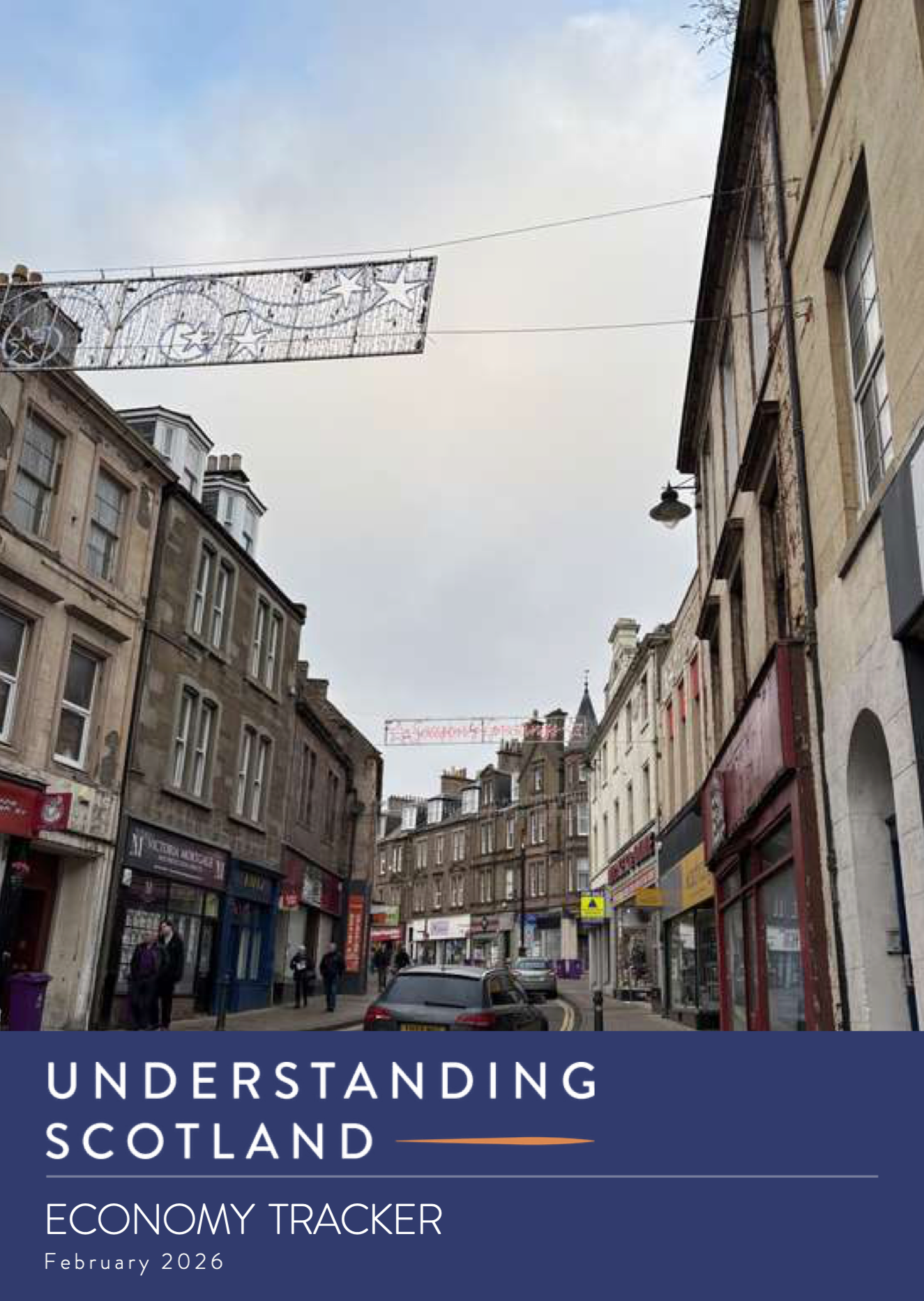
Image credit: Front cover of the Understanding Scotland Economy Tracker, February 2026, image of Arbroath Town Centre by S. Murray