Blog: Nuclear Power - A White Elephant in the Energy Debate
12th February 2026
By Pete Roche
As Scotland prepares for elections, pro‑nuclear lobbyists are urging the Scottish Government to lift its ban on new nuclear developments.
Yet the evidence shows that building new nuclear power stations would be an expensive white elephant — too slow, too costly, and ultimately unnecessary for tackling climate change.
Investing in nuclear now risks diverting resources from cheaper, faster, and safer renewable alternatives that are ready to deploy and without the risk of hazardous waste.
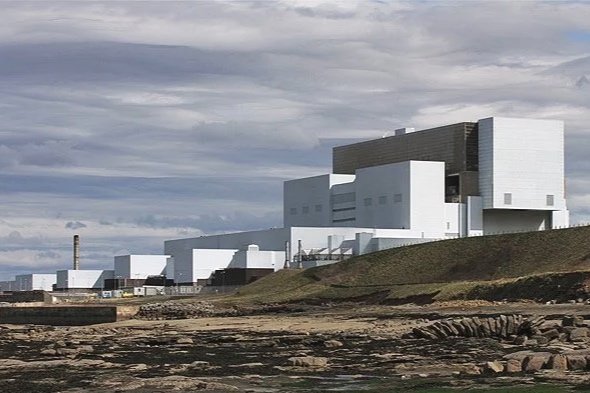
Torness Power Station by Walter Baxter, CC BY-SA 2.0, via Wikimedia Commons
Nuclear makes us more vulnerable
Recent events in Europe underline nuclear’s vulnerabilities in a warming world. In summer 2025, prolonged heatwaves forced several French nuclear plants to reduce output or shut down entirely because the rivers and coastal waters used for cooling became too warm to operate safely. At sites including Golfech and Blayais operators had to curtail production, while the Gravelines plant faced additional disruption when swarms of jellyfish clogged its cooling systems. These incidents show how our changing climate can turn nuclear plants into operational white elephants at precisely the time electricity demand is high as people try to cool homes and buildings.
All energy sources produce carbon emissions over their lifecycle, but nuclear power stations typically emit more CO₂ per kilowatt-hour than wind or solar when construction, uranium mining, and waste management are included. For example, Sizewell C, currently under construction in Suffolk, is not expected to offset the emissions generated during its build phase until the late 2030s — well after the UK should have largely eliminated fossil fuels from electricity generation. Renewables, by contrast, deliver low-carbon power from day one.
Nuclear increases risk
Nuclear also carries long-term environmental and security risks. Coastal and riverside sites face rising sea levels and heatwave-induced water shortages, creating further potential for nuclear plants to become white elephants. They produce long-lived radioactive waste with no permanent disposal solution, are vulnerable to terrorism or armed conflict, and uranium mining causes serious ecological damage.
Advocates argue nuclear is needed for “baseload” power because wind and solar are variable. But baseload is an outdated concept.
Modern grid operators emphasise flexibility — blending renewables, storage, and demand management — rather than relying on inflexible generators. Large nuclear plants cannot easily ramp output to match demand and risk creating the same mismatch that critics cite for renewable variability. Proposed small modular reactors (SMRs) are similarly problematic: only two operate commercially worldwide, they are unproven at scale, and early evidence suggests they may be even more expensive per unit of electricity while producing more toxic waste — another potential white elephant.
Voters need real solutions, not white elephants
Meeting Scotland’s energy needs with renewables is feasible and cost-effective. Analyses suggest a renewable-first strategy could save the UK hundreds of billions compared to nuclear-centric plans, making the most of Scotland’s wind, solar, and engineering expertise. In contrast, costly nuclear projects risk becoming long-term white elephants — expensive, slow, and unsafe — at a time when voters need solutions that work now, not in a far distant future.

Pete Roche is an energy consultant and policy advisor based in Edinburgh. For 30 years, he has worked on environmental and energy efficiency matters, both as an installer and as a consultant. He has represented organisations at meetings across the world, including OSPAR, IMO, and the UN as well as the BNFL National Stakeholder Dialogue in the UK. He was also a member of the Government’s Committee Examining Radiation Risks of Internal Emitters, and acted as a consultant for CoRWM - The Committee on Radioactive Waste Management.