Monday 16th November 2026
Today marks the 60th anniversary of the first broadcast of groundbreaking drama, Cathy Come Home. Tomorrow, The David Hume Institute together with The Open University, Shelter Scotland, The BBC and EICC Live will screen the film followed by a discussion. More details here.
Filmmaker, Ken Loach sent us a message to share ahead of the screening:
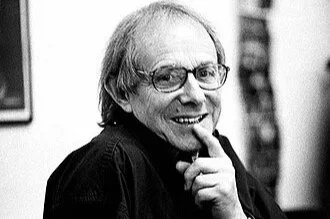
“Thank you for screening Cathy once more. It is sixty years since she first appeared on the screen, but I hope she and her husband Reg still have a message for us today.
The sixties were a special time for the BBC. We had more freedom in our work than at any time before or since.
I was part of a young group - The Wednesday Play - who were asked to produce stories of contemporary life that would be shown on BBC 1 after the news at 9:15 every Wednesday. We could be critical, investigative and challenge the establishment.
What an opportunity for a bunch of youngsters!
We soon found that we needed to leave the restrictions of the studio and take a 16mm film camera onto the streets. That was the reality we wanted to explore. A bit of sharp practice on our part and within a few months studio drama turned into location films. We wouldn't get away with it today! Cathy was one of the first.
Jeremy Sandford was a writer and journalist. He had written pieces that campaigned for the homeless, and described how temporary accommodation was not given to fathers, and families fell apart as a consequence.
Jeremy wrote a script, Tony Garnett produced it and together Cathy was filmed in three hectic weeks. I tried to ensure that the film was as authentic as possible. The characters were fiction but the details of the struggles that homeless people experienced in trying to survive are true and were never challenged.
Carol White was a working class girl from Hammersmith. Her vulnerability, and her desperate care for her children, were heartbreaking. The two small boys were Carol's own children and I think you can see that in how they respond to her.
Ray Brooks, also a working class Londoner, played Carol's husband. His eternal optimism couldn't help but be touching, as it became increasingly desperate as time passed.
Cathy was shown on the BBC, and it became an immediate public scandal. People would not believe that the homeless could be treated with such cruelty.
The charities, Shelter and Crisis, who were already in their infancy, were there with the evidence to support the film's accuracy. Newspaper articles, broadcast discussions, even questions in parliament - it seemed to go on forever.
The BBC establishment hated it - 'dangerous' was the word they used. They complained they could not tell if it was real or fictional. They obviously did not read the cast list or see who had written the screenplay.
The Clean Up TV leader, Mary Whitehouse, went on air to attack us. 'Propaganda' she cried - although it was not clear what propaganda she meant. In her unforgiving world, poverty is the fault of the poor.
And now, sixty years on? Where are we now?
We know the answer. We have a housing crisis, and homelessness is worse than ever.
In August this year, 177,530 children were in temporary accommodation, with no permanent home of their own.
These are figures from the Ministry of Housing, and show an increase of 5% in a year. Should we be surprised?
No!
House building has long been in the grip of the large building corporations, whose prime concern is, naturally, profit. They build houses that will attract the highest price. That usually means so-called 'executive' developments for those able to pay top price.
A few years ago, the market had international buyers who wanted luxury apartments as investments. Building workers built them, although many of the flats stayed unoccupied. Meanwhile the great majority of people went without the homes that were so desperately needed.
The Housing Minister in post-war Britain, Nye Bevan, rejected this model. Planners and architects designed the best houses they could for the families and returning soldiers who had survived the war.
Estates were well designed, houses were well-built and public services, green spaces, shops and transport were all integrated.
Equally important was Bevan's support for councils to employ their own building teams. It meant building workers had secure jobs, were well trained and could live in the houses they had helped to build.
A woman who worked for Shelter once showed me a letter her father, a building worker, had kept in his wallet all his life. The letter told him he and his family had a council house on the very street on which he had worked. You can imagine his pride.
Well, you can see where this is going!
I think this is the way we should go. It could be the answer to the housing crisis, and finally give Cathy and Reg somewhere to call home - planned council housing within a planned economy.
There is so much to consider, and it is beyond an introduction to a film.
But remember, in the 1940s, Nye Bevan found the answer. Let's learn from that and create it again in our lifetime - well yours at least!
If we carry on as we are, Cathy and Reg will never find a home.
Work together, in our common interest and there is no reason why we should not build the homes that will give people the security we should all expect.
When challenged on why he demanded such high standards for council housing, Nye Bevan said this: 'Nothing is too good for the working class.'
And so say all of us!
Warmest good wishes and solidarity, Ken Loach.