
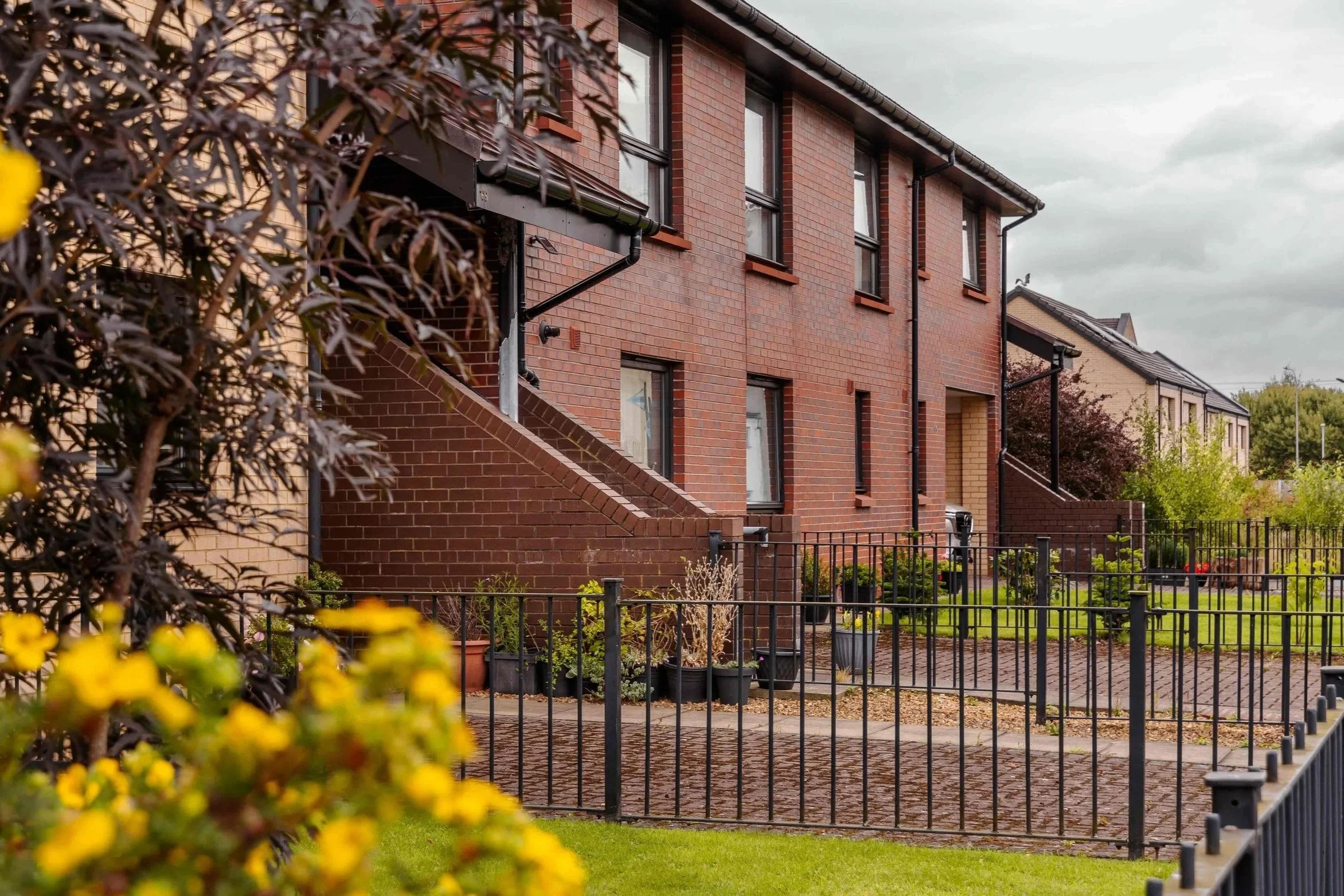
New Research reveals Housing Associations are Overlooked “Economic Anchors”
New research reveals housing associations are local “economic anchors” for Scotland which are often overlooked and misunderstood.
Published: 2nd September 2026
Call for housing associations to be treated by government as economic infrastructure and for the full economic return on housing investment to be measured.
Scotland’s housing associations are much more than providers of social housing: they are substantial economic organisations that employ people, invest billions, support businesses and supply chains, regenerate communities, facilitate labour market change and reduce pressures on other public services.
The new independent research by the David Hume InstituteThe Story so Far: Housing Associations and the Scottish Economy, was authored by internationally renowned housing economist Professor Duncan Maclennan and Dr Andrew Robert Watson. Commissioned by the Scottish Federation of Housing Associations (SFHA), the research argues that the economic contribution of the sector is significant but remains largely invisible because it is not measured consistently.
The report says SFHA members alone have approximately £2.27 billion in turnover, £1.80 billion in operating expenditure and £579 million in staff costs – and these headline figures understate the sector’s wider economic footprint, which extends through contractors, suppliers and employee spending as well as the productivity benefits that flow from good, well-located housing.
The report describes housing associations as “anchor institutions” - longterm organisations rooted in the communities they serve, with the ability to own assets, employ people, procure locally and invest over many years. Their economic role extends into regeneration, community facilities, commercial workspace, apprenticeships, employability, local procurement, social enterprise, welfare advice, tenancy sustainment, specialist housing, care and support, and energy investment. All in addition to the health and human capital gains that flow from a better housed population.
Professor Duncan Maclennan, author of the report, said:
“Housing associations are routinely described as social landlords. That description is true, but it misses a large part of the story. They are economic institutions embedded in the places they serve. They employ, invest, procure, build, regenerate and help people to develop skills and participate in the economy.
“The striking finding is not that this economic value routinely exists, but that we do not yet count enough of it. If Government looks only at the immediate cost of housing investment, it risks missing the wider economic return – and the costs that good housing can prevent elsewhere.” Too often associations and their impacts, with some important exceptions in rural Scotland, are missing in the discussions of Scotland’s Regional Economic Partnerships and more local economic development initiatives. That has to change.”
The report argues that good housing can reduce pressure on public services by helping to prevent homelessness, ill health, financial insecurity, educational disadvantage and social isolation, while supporting people to remain independent. Housing associations already undertake substantial preventative work, but the economic value of that work is not sufficiently measured.
It also highlights the distinctive economic contribution of housing associations as not-for-profit organisations. Economic value generated through their activities can be retained and reinvested in homes, services and communities rather than distributed to shareholders. Where spending is retained locally, this can strengthen local economies.
Richard Meade, Chief Executive of SFHA, said:
“Housing associations have always been about far more than bricks and mortar. This research shows just how much our members contribute to Scotland's economy, as major employers, as investors of billions, and as anchor institutions rooted in the communities they serve. For too long that contribution has gone largely unmeasured, and therefore unrecognised.
We commissioned this work because the case for investing in housing is an economic one as much as a social one. We are calling on government and regional economic bodies to treat social housing as critical economic infrastructure, to recognise housing associations as genuine economic partners, and to measure the full return on housing investment. We also accept the challenge the report sets for our own sector, to be more confident in telling our economic story, and to build the evidence that proves it.”
The economic case is not yet being measured
The report identifies a significant gap between the economic activity housing associations undertake and the evidence available to demonstrate its full impact.
Individual associations already measure aspects such as local procurement, employment, apprenticeships, tenant financial gains and community benefits. But there is no consistent framework for aggregating this information and understanding the sector’s full economic contribution.
The report calls for this cycle to be broken, arguing that Government should:
Recognise housing associations as economic partners in local and regional economic development
Treat housing as economic infrastructure, alongside transport, skills, digital infrastructure and business investment
Measure the full return on housing investment, including employment, supply chains, productivity, household income, regeneration and public-sector cost avoidance
Establish how much economic activity housing association spending generates and how much is retained locally
Recognise the not-for-profit advantage of retaining and reinvesting economic value and
Consider the cost of not investing, as well as the immediate cost of investment.
The report also challenges the sector itself to become more confident in describing its role as an economic one, and to systematically measure its local employment, procurement, skills, tenant income, economic circulation, regeneration and preventative public-service impacts.
Professor Maclennan said:
“It is always important to know what housing costs, and we do, but we also need to know the benefits these investments create for the long term and presently we don’t”
The report concludes that the economic case for housing associations is not an addition to their social purpose but integral to it.
Susan Murray, Director of the David Hume Institute said “
“At a time when public finances are under enormous pressure, every pound of public investment has to be understood in terms of the value it creates. This report makes a strong case that housing investment should be judged on its full return, not simply its headline cost.
“The message for Government is straightforward: housing is part of Scotland’s economic infrastructure. The housing association sector is already creating economic value. By investing in it, you get much more bang for your buck. Now we need to measure the full impact, recognise it in policy and investment decisions, and make sure Scotland gets the full benefit.”
ENDS
Notes to editors
The Story so Far: Housing Associations and the Economy was commissioned by the Scottish Federation of Housing Associations from The David Hume Institute and authored by Professor Duncan Maclennan and Dr Andrew Robert Watson.
The research uses a mixed-methods approach, combining regulatory and financial data alongside a survey of SFHA members, group and one-to-one interviews.
The report does not claim to provide a single definitive estimate of the total economic impact of Scotland’s housing associations. Its purpose is to identify the components of that contribution and lay the foundations for a stronger, evidence-based economic narrative.
Key figures
£2.27bn – approximate turnover of SFHA members
£1.80bn – approximate operating expenditure
£579m – approximate staff costs
Housing associations’ economic impacts operate at direct, indirect and induced levels.
About the David Hume Institute
The David Hume Institute is an independent research institute with a mission to improve understanding of the economy in Scotland. DHI undertakes research and hosts public events to encourage discussion about the economy and society.
About Scottish Federation of Housing Associations
The Scottish Federation of Housing Associations (SFHA) is the collective voice for housing associations and co-operatives in Scotland, providing safe, warm affordable homes for over half a million people and employing over 13,000 people. Housing associations were built in and by communities across Scotland and continue to exist to make lives and places better. Beyond simply providing an affordable rent, they support tenants with a range of needs in every constituency.