

Cost of Living Continues to Keep Scots' Awake at Night
The latest Understanding Scotland economy Tracker reveals financial strain continues to impact people's daily lives, leisure activities and health.
23rd August 2026
Tracker survey reveals financial strain is impacting people's daily lives, leisure activities and health.
The ongoing cost of living squeeze remains a dominant issue for Scots. According to the latest Understanding Scotland Economy Tracker, almost half (47%) identify inflation and living costs as one of the most important issues facing the country for a second consecutive quarter.
The latest findings suggest an increasingly anxious public where financial strain is directly impacting daily life, leisure and health.
Other key findings include:
More than two-thirds of Scots who expressed an opinion (68%) say the economy is worse than it was a year ago.
A similar proportion (67%) expect economic conditions to worsen over the next 12 months.
Only around a quarter of Scots (24%) believe things in Scotland are heading in the right direction.
The survey also highlights how economic pressure is shaping everyday behaviour across Scotland:
More than half of respondents (52%) say they have reduced non-essential spending because of concerns about money matters.
Half (51%) say they have cut back on leisure activities.
Four in ten Scots (40%) say they have dipped into savings to meet higher costs.
Three in ten say concerns about money have affected their mental health (30%) or caused them to lose sleep (29%).
The findings point to continued pressure on household finances, with large numbers of Scots changing spending habits and making difficult financial choices in response to rising costs.
The majority of Scots remain broadly positive about aspects of employment, attitudes towards income and living standards are markedly less positive:
Nearly three-quarters of Scots (73%) are satisfied that their employment provides enough paid hours.
Two-thirds (66%) are satisfied with their job security.
However, just 37% are satisfied with their income level.
Almost half (49%) are dissatisfied with how well their income covers the cost of living.
While cost of living pressures remain dominant, the survey points to a shifting set of public priorities.
Immigration has risen to a record high for the series, with one in four Scots (25%) identifying it as one of the country's most important issues. The proportion highlighting social care as a key issue has increased to 13%, its highest level since the earliest wave of Understanding Scotland in 2021, while the environment and climate change has also risen sharply to 13%, its highest level since late 2023.
Meanwhile, the proportion identifying healthcare and the NHS as one of Scotland's most important issues has fallen seven percentage points since May down to 40% or four in ten - its lowest level since January 2022.
Scott Edgar, Head of Analysis and Insights, The Diffley Partnership:
“The cost of living remains the defining issue for Scots, and the findings suggest financial pressures continue to shape both public priorities and everyday behaviour.
While economic sentiment has become slightly less negative since May, large majorities still believe economic conditions are worsening and expect further deterioration over the coming year.
At the same time, we are seeing the public agenda broaden. Alongside concerns about household finances, issues such as immigration, social care and climate change are becoming more prominent, reflecting a public that is responding both to events happening in Scotland and across the UK.”
Susan Murray, Director, David Hume Institute:
“This survey continues to show a ticking time bomb for those under financial strain as they struggle to make ends meet. A significant proportion of people are forced into behaviours that will have a detrimental effect on their long term health.
Any government talking about economic growth needs to remember a tired and stressed workforce is not good for productivity or the labour market.”
The Understanding Scotland Economy Tracker surveyed 2,186 adults across Scotland between 2 and 5 August 2026. The survey has been tracking public opinion and behaviour on the Scottish Economy since October 2021.
ENDS
Notes to editors:
Designed by the Diffley Partnership and the David Hume Institute, the survey received 2,186 responses from a representative sample of the adult population, aged 16+, across Scotland. Invitations were issued online using the ScotPulse panel, and fieldwork was conducted between the 2nd and 5th August 2026. Results are weighted to the Scottish population (2024 estimates) by age and gender.
New research to reveal housing associations’ roles in improving Scotland’s economic performance
DHI and Professor Duncan Maclennan commissioned for new research to better understand the sector’s impact on the Scottish economy.
8th April 2026
SFHA commission new research from Professor Duncan Maclennan and the David Hume Institute to better understand the sector’s impact on the Scottish economy.
The Scottish Federation of Housing Associations (SFHA) has commissioned research from the David Hume Institute and global housing expert, Professor Duncan Maclennan to better understand the contribution of housing associations to Scotland’s economy.
The research, titled Beyond bricks and mortar: Recognising housing associations’ role in Scotland’s economyseeks to evidence the impact of housing associations as a national driver of fairer and faster economic growth.
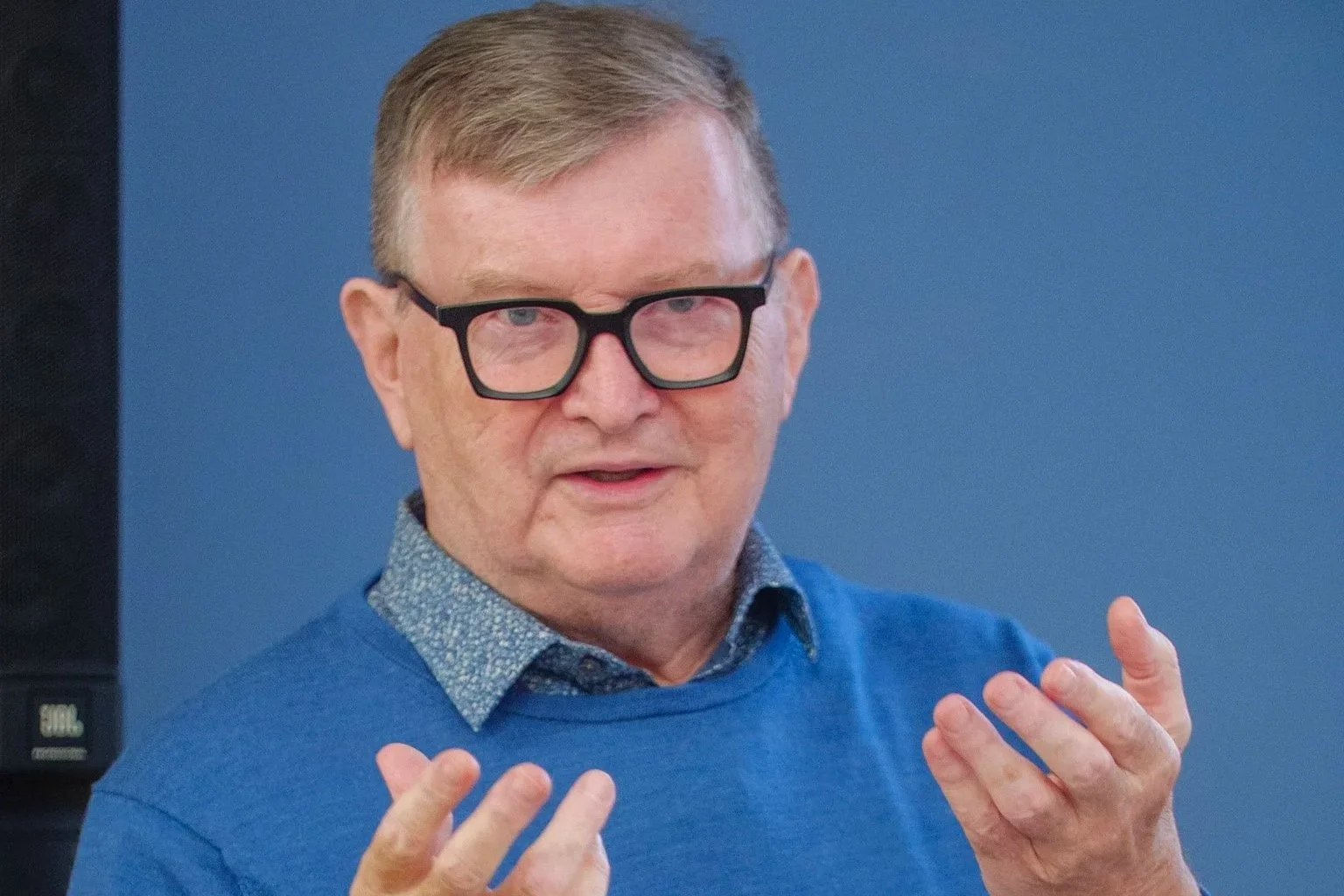
Professor Maclennan is an applied economist specialising in housing, neighbourhoods and cities with his professional background involving both senior academic and policy roles in Australia, Canada and the UK.
His recent work has advocated for a whole system approach, recognising the economic drivers and adverse consequences of poor housing outcomes, to tackling the housing polycrisis. This includes a major report he authored with the David Hume Institute last year titled Prosperity Begins At Home. The report had argued for a radical shift in the understanding of housing as just a social issue to instead be recognised as a critical economic infrastructure shaping jobs, economic growth and environment.
The new research commissioned by SFHA is due to report later this year and will build on the themes of the Prosperity Begins At Home report.
As part of the research, SFHA member housing associations will shortly receive a survey to share their insights into the scale and economic reach of their organisation. Professor Maclennan will use these insights along with other research on how housing outcomes impact health, education and accessibility to jobs in ways that shape growth and productivity.
The aim of outlining the full contribution of housing associations to Scotland’s economy comes as the country is set to go to the polls for May’s Scottish Parliament election. The research findings will provide an opportunity for elected MSPs to understand the full scale and reach of Scotland’s housing associations as a driver for economic growth and productivity. Abating the housing polycrisis requires a change in mindsets, systems and outcomes and the research will provide a coherent economic story for politicians and practitioners that has been missing too long in Scotland.
SFHA Chief Executive, Richard Meade said:
“Housing associations and co-operatives have been an integral part of Scotland’s social fabric for decades providing over 300,000 secure, warm and affordable homes in communities everywhere from Shetland to the Scottish Borders.
“However, as well as their unique social purpose, housing associations make a significant contribution to Scotland’s economy. They provide tens of thousands of jobs, invest significantly in communities and the social infrastructure they create is vital to supply chains and businesses throughout the country.
“We are delighted to commission the David Hume Institute and Professor Duncan Maclennan to better evidence the contribution of housing associations to Scotland’s economy. This research will show the impact housing associations have on the economy and the contributions they make to meeting Scotland’s economic missions..
“Ending the housing emergency is not only a moral imperative, but it is also an economic imperative. This research will set out an evidence-based business case for investing in housing associations to create a more prosperous country.”
Professor Duncan Maclennan said:
“Housing has too often been viewed narrowly as a social issue, when in reality it is a fundamental part of a well-functioning economy. This research will explore how housing associations contribute not only to meeting housing need, but to improving productivity, supporting labour markets and enabling sustainable economic growth across Scotland. By taking a whole-system perspective, we can better understand the full economic value of the sector and its role in shaping a more prosperous future.”
Susan Murray, Director of the David Hume Institute said:
“This research builds on our work highlighting housing as essential economic infrastructure. At a time when Scotland is focused on growth and productivity, it is vital that we fully recognise the contribution housing associations make - not just socially, but economically. By strengthening the evidence base, this research will help inform policy and investment decisions that support both communities and long-term economic resilience.”
[ENDS]
Notes to Editors
Housing associations directly employ over 13,000 people across Scotland and invest hundreds of millions of pounds in developing new homes and improving existing homes.
Scottish Federation of Housing Associations (SFHA) is the membership body for, and collective voice of housing associations and co‑operatives in Scotland.
About Professor Duncan Maclennan: Duncan was a member of the Board of Scottish Homes from 1989 until 1999 and then spent a decade working in government, as special Adviser to the First Ministers of Scotland, as a Chief Economist in the Government of Victoria and as Chief Economist in Canada’s Federal Department for Infrastructure and Cities. He has acted as adviser to Ministers in the UK, Scotland, France, Poland and Norway, Canada, Australia and New Zealand. He is a fellow of the Royal Society of Edinburgh, the Academy of Social Sciences and Honorary Member of the Royal Town Planning Institute, The Chartered Institute of Housing and the Royal Institute of Chartered Surveyors. He was awarded a CBE for services to UK housing research in 1997. He remains affiliated to the University of Glasgow as an Emeritus Professor of Urban Economics and holds Professorial appointments in Housing Economics at McMaster University (Ontario) and UNSW (Sydney).
About the David Hume Institute: The David Hume Institute is an independent think tank with a mission to improve understanding of the economy in Scotland. DHI undertakes research and hosts public events to encourage discussion about the economy and society.