
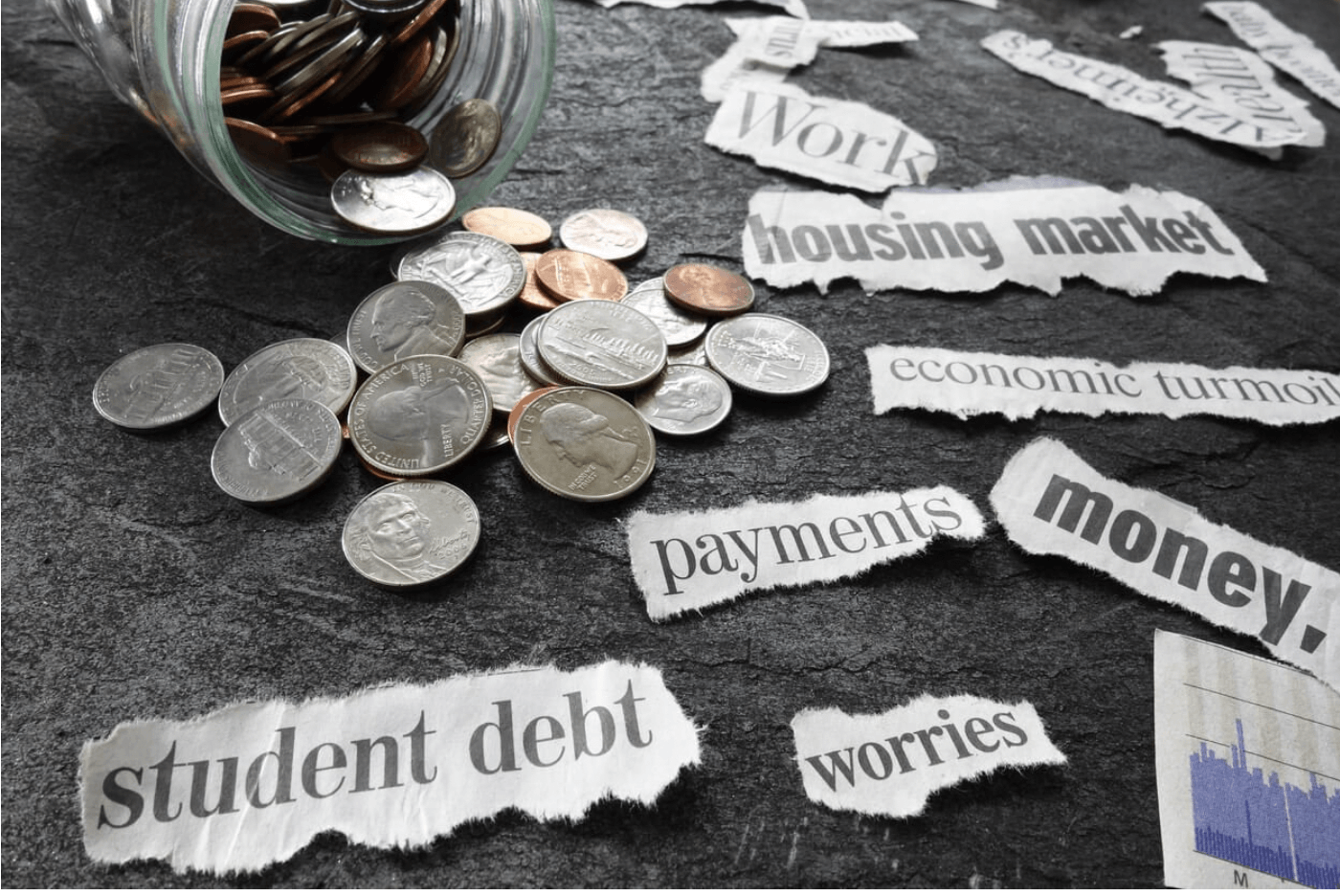
Cost of Living Continues to Keep Scots' Awake at Night
The latest Understanding Scotland economy Tracker reveals financial strain continues to impact people's daily lives, leisure activities and health.
23rd August 2026
Tracker survey reveals financial strain is impacting people's daily lives, leisure activities and health.
The ongoing cost of living squeeze remains a dominant issue for Scots. According to the latest Understanding Scotland Economy Tracker, almost half (47%) identify inflation and living costs as one of the most important issues facing the country for a second consecutive quarter.
The latest findings suggest an increasingly anxious public where financial strain is directly impacting daily life, leisure and health.
Other key findings include:
More than two-thirds of Scots who expressed an opinion (68%) say the economy is worse than it was a year ago.
A similar proportion (67%) expect economic conditions to worsen over the next 12 months.
Only around a quarter of Scots (24%) believe things in Scotland are heading in the right direction.
The survey also highlights how economic pressure is shaping everyday behaviour across Scotland:
More than half of respondents (52%) say they have reduced non-essential spending because of concerns about money matters.
Half (51%) say they have cut back on leisure activities.
Four in ten Scots (40%) say they have dipped into savings to meet higher costs.
Three in ten say concerns about money have affected their mental health (30%) or caused them to lose sleep (29%).
The findings point to continued pressure on household finances, with large numbers of Scots changing spending habits and making difficult financial choices in response to rising costs.
The majority of Scots remain broadly positive about aspects of employment, attitudes towards income and living standards are markedly less positive:
Nearly three-quarters of Scots (73%) are satisfied that their employment provides enough paid hours.
Two-thirds (66%) are satisfied with their job security.
However, just 37% are satisfied with their income level.
Almost half (49%) are dissatisfied with how well their income covers the cost of living.
While cost of living pressures remain dominant, the survey points to a shifting set of public priorities.
Immigration has risen to a record high for the series, with one in four Scots (25%) identifying it as one of the country's most important issues. The proportion highlighting social care as a key issue has increased to 13%, its highest level since the earliest wave of Understanding Scotland in 2021, while the environment and climate change has also risen sharply to 13%, its highest level since late 2023.
Meanwhile, the proportion identifying healthcare and the NHS as one of Scotland's most important issues has fallen seven percentage points since May down to 40% or four in ten - its lowest level since January 2022.
Scott Edgar, Head of Analysis and Insights, The Diffley Partnership:
“The cost of living remains the defining issue for Scots, and the findings suggest financial pressures continue to shape both public priorities and everyday behaviour.
While economic sentiment has become slightly less negative since May, large majorities still believe economic conditions are worsening and expect further deterioration over the coming year.
At the same time, we are seeing the public agenda broaden. Alongside concerns about household finances, issues such as immigration, social care and climate change are becoming more prominent, reflecting a public that is responding both to events happening in Scotland and across the UK.”
Susan Murray, Director, David Hume Institute:
“This survey continues to show a ticking time bomb for those under financial strain as they struggle to make ends meet. A significant proportion of people are forced into behaviours that will have a detrimental effect on their long term health.
Any government talking about economic growth needs to remember a tired and stressed workforce is not good for productivity or the labour market.”
The Understanding Scotland Economy Tracker surveyed 2,186 adults across Scotland between 2 and 5 August 2026. The survey has been tracking public opinion and behaviour on the Scottish Economy since October 2021.
ENDS
Notes to editors:
Designed by the Diffley Partnership and the David Hume Institute, the survey received 2,186 responses from a representative sample of the adult population, aged 16+, across Scotland. Invitations were issued online using the ScotPulse panel, and fieldwork was conducted between the 2nd and 5th August 2026. Results are weighted to the Scottish population (2024 estimates) by age and gender.
Cost of Living Dislodges the NHS as Scots’ Top Concern
The latest Understanding Scotland Economy Tracker reveals the Cost of Living Dislodges the NHS as Scots’ Top Concern
25th May 2026
Tracker survey shows economic worries worsen as Scots fear further rises in cost of living
The cost of living has overtaken healthcare and the NHS as the single biggest concern facing Scots for the first time in nearly three years, according to the latest Understanding Scotland Economy Tracker.
The quarterly survey, produced by The David Hume Institute with the Diffley Partnership paints an increasingly downbeat picture of Scotland’s economic mood following the 2026 Scottish Parliament election.
Key findings include:
Almost one in two Scots (47%) now rank the cost of living and inflation among the top issues facing the country.
More than three in four Scots who expressed an opinion (77%) say the economy is worse than a year ago, up sharply from around three in five (62%) in February, while a similar proportion (73%) expect economic conditions to deteriorate further over the next 12 months.
Despite this collapse in economic sentiment, three in ten Scots (30%) now think the country is heading in the right direction, up notably since November 2025 (22%).
The findings suggest household financial pressures are once again dominating Scots attitudes, despite easing inflation headlines and political change at Holyrood.
The survey also highlights how economic pressure is shaping everyday behaviour across Scotland:
More than half of respondents (54%) say they have cut back on leisure activities because of concerns about money matters.
A similar proportion (52%) say they have reduced non-essential spending.
More than two in five Scots (41%) say they have dipped into savings to cope with rising costs.
The findings point to growing pressure on consumer confidence and household resilience - a significant concern for Scotland’s wider economy given the importance of consumer spending to the economy.
The report also identifies warning signs emerging in the labour market and housing affordability:
Less than half of Scots (43%) are confident they could find a new job within three months if necessary, a decrease of four percentage points from last May (47%).
Six in ten people (61%) say they are confident they could cope with higher housing costs over the next six months - down compared to last year.
The findings highlight the difficult economic backdrop faced by the country as it begins the new parliamentary term, with public expectations increasingly focused on living standards, wages and household financial security rather than constitutional debate.
The survey also highlights continued support for preventative approaches to tackling economic hardship:
Nearly four in five Scots (78%) agree it costs the public purse more in the long run when people cannot meet their basic needs today.
More than two thirds (68%) agree there is a collective responsibility to ensure a safety net during hard economic times.
Scott Edgar, Senior Research Manager, The Diffley Partnership:
“Coming just after the Scottish Parliament election, these findings underline the scale of the economic challenge facing the new Parliament. While there has been a modest improvement in how people feel about the country’s direction, that sits alongside a much more pessimistic view of the economy and living standards.
The cost of living is the defining issue for Scots, overtaking the NHS as the top concern, and shaping how people are managing their day-to-day lives.
The task now for decision-makers is to rebuild confidence at a time when financial pressures remain entrenched and expectations for the future are increasingly fragile.”
Susan Murray, Director, The David Hume Institute:
“Consumer confidence is fundamental to a thriving economy. When people are cutting back on leisure activities, reducing non-essential spending and dipping into savings to cover everyday costs, that has a direct impact on the wider economy, investment and local communities.
“The challenge for Scotland’s political and business leaders now is to rebuild confidence at a time when public pessimism about the economy and rising cost of living is deepening and expectations for the future are becoming increasingly fragile.”
The Understanding Scotland Economy Tracker surveyed 2,170 adults across Scotland between 11 and 15 May 2026. The survey has been tracking public opinion and behaviour on the Scottish Economy since October 2021.
ENDS
Notes
Designed by the Diffley Partnership and the David Hume Institute, the survey received 2,170 responses from a representative sample of the adult population, aged 16+, across Scotland. Invitations were issued online using the ScotPulse panel, and fieldwork was conducted between the 11th and 15th May 2026. Results are weighted to the Scottish population (2024 estimates) by age and gender.